
The Day the Mustang Galloped Into History
Ford unveiled the Mustang at the 1964 New York World's Fair on April 17, and America fell in love at first sight.
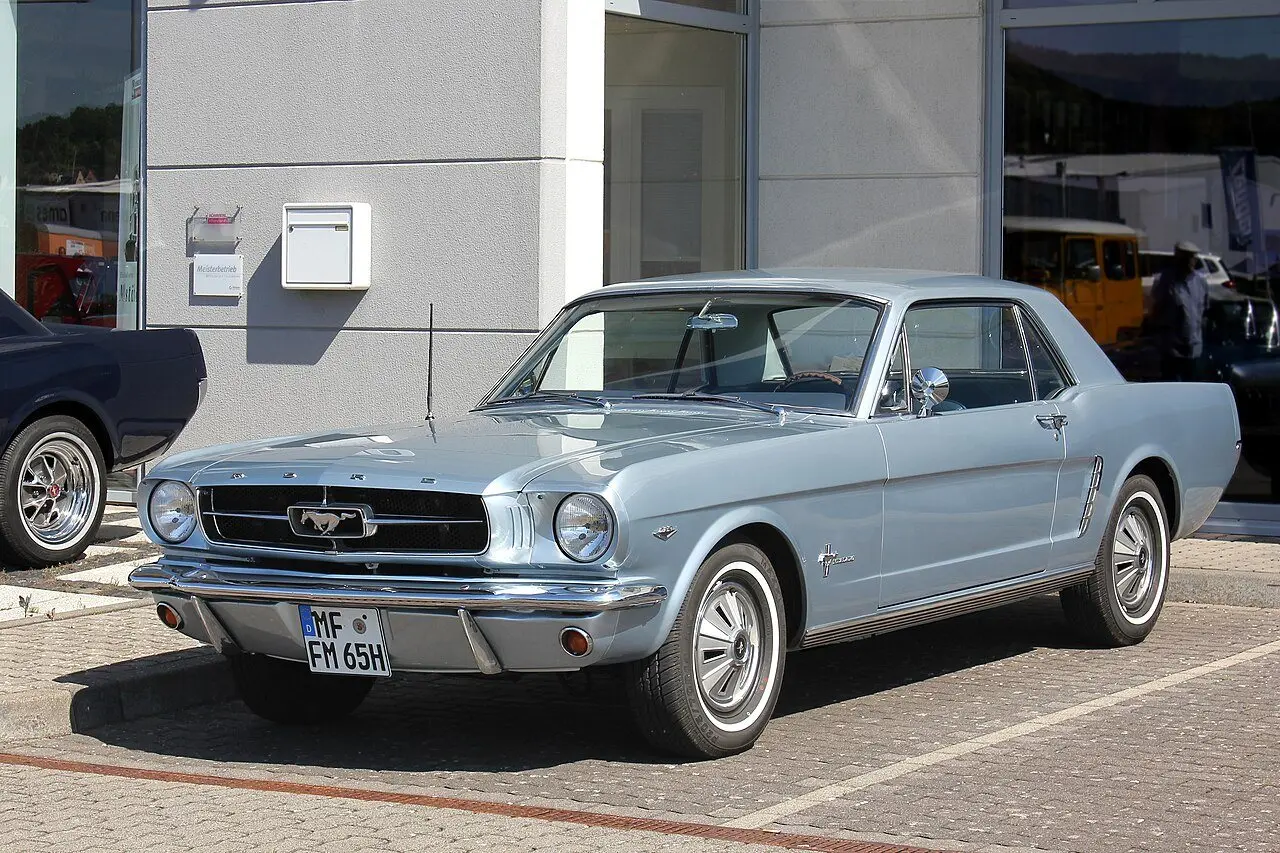
On April 17, 1964, the biggest star at the New York World's Fair wasn't a futuristic pavilion or a marvel of engineering. It was a car — a long-hooded, short-decked coupe with a galloping horse on its grille. That day, Ford unveiled the Mustang, and the automobile world would never be the same.
The Mustang was the brainchild of Lee Iacocca, then Ford's general manager, who had been lobbying since 1961 for what he called a "poor man's Thunderbird": a sporty, youthful car ordinary buyers could afford. To keep costs down, Ford built it on the humble bones of the Ford Falcon compact, but wrapped the package in styling that looked like a million dollars. The base price was just $2,368.
Ford pulled out every stop for the launch. In the weeks before the reveal, the car appeared on the covers of both Time and Newsweek and in prime-time television commercials on all three major networks. Then, on the Fair's opening day, the wraps came off at Ford's pavilion — while, across America, the very same day, Mustangs rolled into dealer showrooms. One eager buyer reportedly slept in a Ford showroom until his check cleared so he could drive his new Mustang home.
Buyers could choose a coupe, a fastback, or a convertible, with engines ranging from a thrifty 170-cubic-inch six-cylinder to a 289-cubic-inch V8. A 271-horsepower high-performance 289 arrived that June. Because the car launched in April rather than the traditional fall new-model season, Ford officially called them 1965 models — but the public forever dubbed the early cars the "1964½" Mustang.
The name itself carries a little mystery. Ford says the Mustang was named for the wild horse of the American West; some of the car's designers insisted the inspiration was the legendary P-51 Mustang fighter plane of World War II. Either way, the galloping badge fit.
America's response was delirious. Dealers took some 22,000 orders on the first day alone. Within six weeks the Mustang was the best-selling compact car in the country, and by its first birthday it had sold more than 417,000 units — roughly four times what Iacocca had projected. The car even co-starred in the James Bond film Goldfinger the same year, cementing its pop-culture status.
The Mustang created an entirely new category — the "pony car" — and inspired a generation of imitators. More than six decades later, enthusiasts still gather every April 17 to celebrate National Mustang Day, and the galloping horse remains one of the most recognized badges on the road. It all started with a spring day at the World's Fair, when Ford bet that style didn't have to be expensive — and won.
Photo: Lothar Spurzem, CC BY-SA 2.0 de (via Wikimedia Commons).