The 70-Year-Old Grandmother Who Cast the First Vote
On September 6, 1870, 70-year-old Louisa Ann Swain walked to the ballot box in Laramie, Wyoming, and became the first woman celebrated for voting in a United States general election.
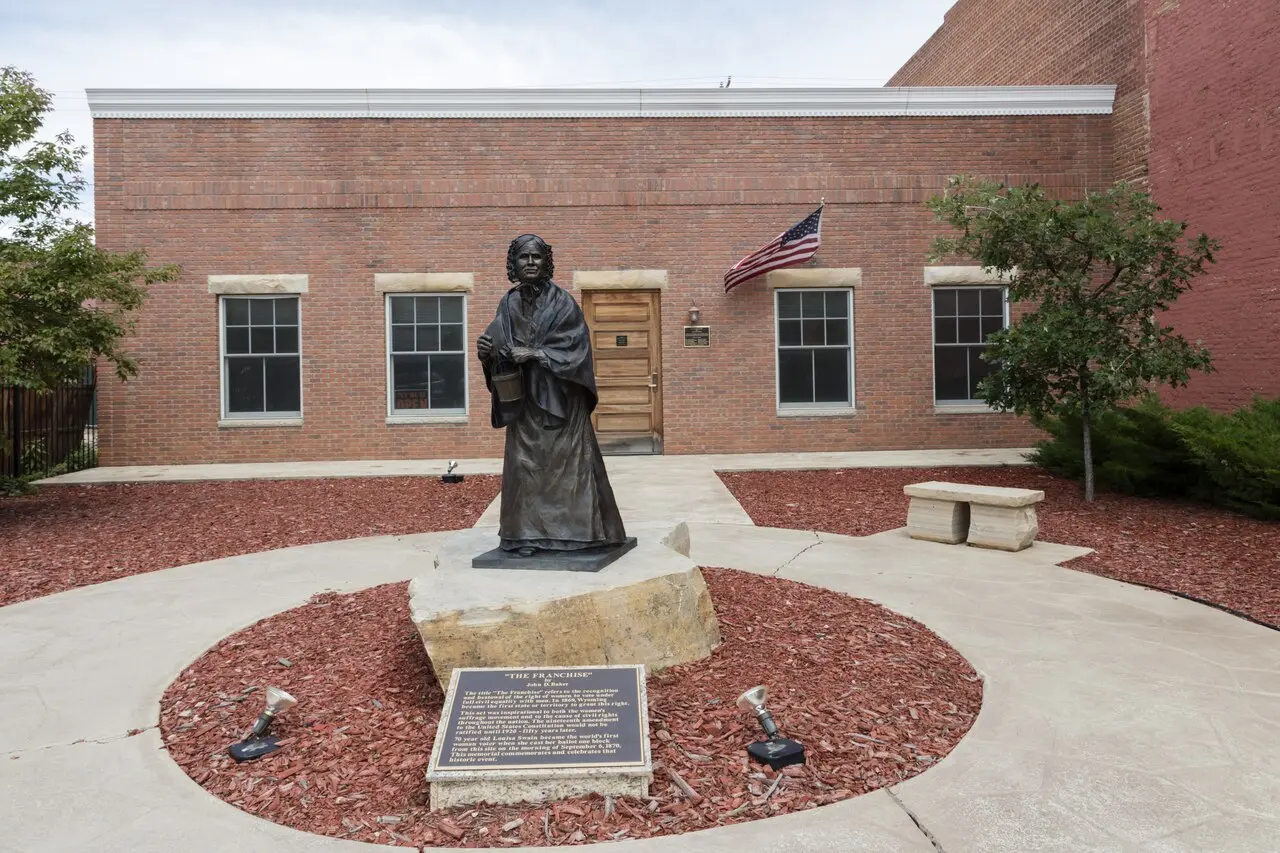
She was seventy years old, a grandmother, her white hair peeking out from under her bonnet — and she was about to do something no woman in America had done in more than sixty years.
On September 6, 1870, Louisa Ann Swain walked to the ballot box in Laramie, Wyoming Territory, and cast her vote in the general election. She has been celebrated ever since as the first woman to cast a ballot in a United States general election.
Swain could vote because Wyoming Territory had done something no government on Earth had ever done. In December 1869, the territorial legislature granted women full and unconditional voting rights — the first government in the world to do so — and the territorial governor signed it into law. Some lawmakers were moved by principle; others were being practical — there were far more men than women in the territory, and supporters hoped the vote would draw more women west. Wyoming went further still, letting women serve on juries and in the courts; in 1870, Esther Morris became the first female justice of the peace in the United States.
Swain's own road to that ballot box had been long. Born into a Quaker family around 1800 or 1801, she lost her father at sea when she was seven and her mother soon after; by the age of ten she was living in the Charleston Orphan House in South Carolina. She married chair-factory owner Stephen Swain in 1821, raised four children, and moved steadily west — to Ohio, then Indiana, and finally to Laramie in 1869, to be near their son.
A note of honesty: historians still debate the fine print of Swain's "first." Women in Utah Territory had cast ballots about a month earlier, and competing claims to the title carry a great deal of uncertainty. But Swain became the face of the milestone — celebrated in newspapers for decades, honored by Congress in 2008 with a "Louisa Swain Day," and memorialized by a bronze statue in downtown Laramie.
It would take the rest of the country fifty more years to catch up. When the 19th Amendment finally guaranteed women the vote nationwide in 1920, Wyoming — "the Equality State" — could point to a grandmother in Laramie and say it had been doing it for half a century.
Why it matters: the vote is an abstraction until someone casts it. Louisa Ann Swain was an ordinary woman — an orphan, a wife, a mother — and one ordinary ballot made her the living proof that the franchise belonged to everyone.
Photo: Carol M. Highsmith, public domain, via Wikimedia Commons (Library of Congress).