Roosevelt's Gamble to Save the Grand Canyon
On January 11, 1908, Theodore Roosevelt proclaimed the Grand Canyon a national monument, shielding more than 800,000 acres that Congress had refused to protect.
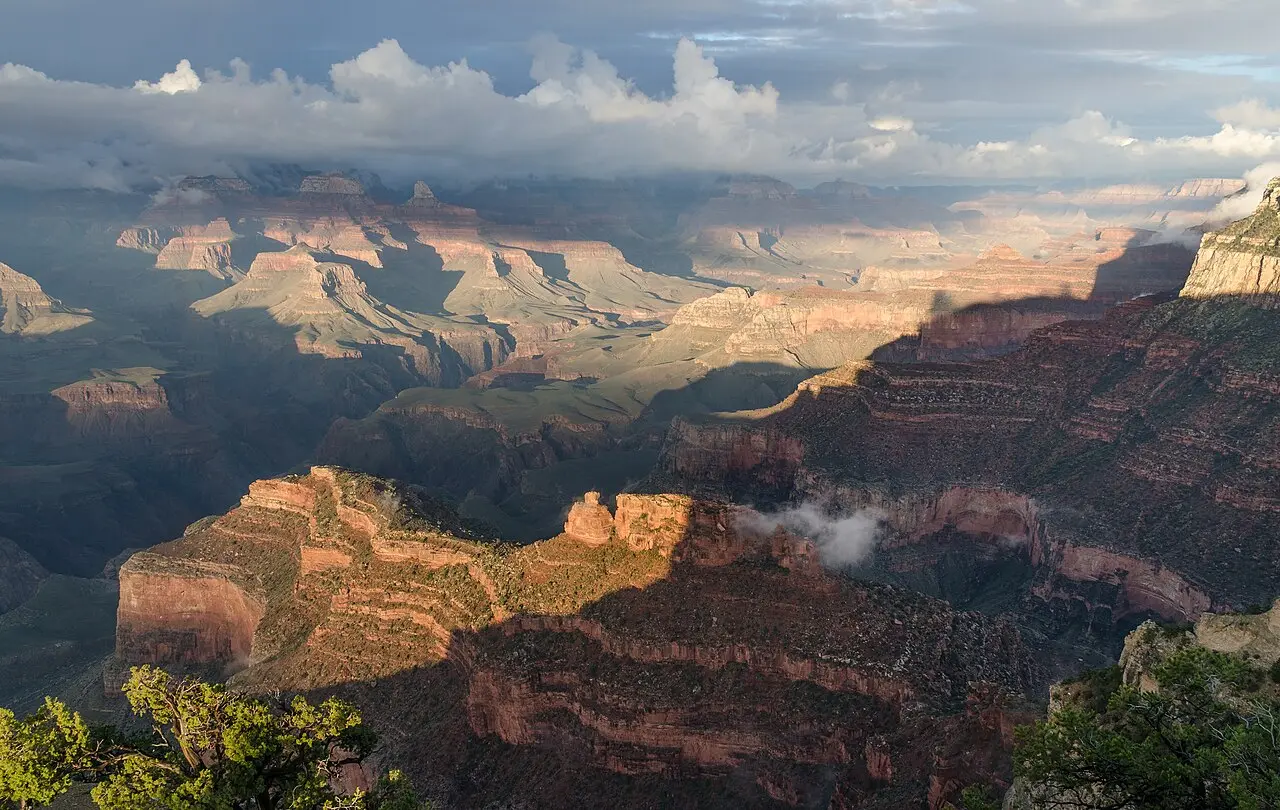
Theodore Roosevelt had stood at the edge of the Grand Canyon in 1903 and been humbled by it. Speaking to the people of Arizona, he begged them to keep the canyon exactly as nature had made it: "Let this great wonder of nature remain as it now is," he said. "You cannot improve on it. But what you can do is keep it for your children, your children's children, and all who come after you, as the one great sight which every American should see."
Five years later, on January 11, 1908, he stopped asking and acted. Roosevelt signed a proclamation making the Grand Canyon a national monument — more than 800,000 acres of it, a canyon 277 miles long and over a mile deep, its rock layers recording hundreds of millions of years of Earth's history.
It was a legal stretch, and everyone knew it. Congress alone could create a national park, and Congress had been stalling on the Grand Canyon since an 1882 park bill died there. Mining companies were staking claims inside the canyon, and Arizona's territorial delegate, Marcus Smith, insisted that protecting the canyon violated the intent of the 1906 Antiquities Act, which Roosevelt was using as his authority. Roosevelt's answer was geology: the canyon's exposed rock was an object of profound scientific interest, and that, he argued, was exactly what the law allowed him to protect.
Opponents took him to court. The courts sustained the president's power — a ruling that established, once and for all, that presidents have broad discretion to decide what counts as an object of historic or scientific interest and how much land it takes to protect it. That single courtroom vindication is the reason later presidents could create monuments like the Grand Tetons' expansion, and the reason the Antiquities Act remains one of the most powerful conservation tools in American law.
The canyon's story runs deeper than 1908. Native peoples had lived in its caves and along its river for thousands of years; Spanish explorers under Coronado glimpsed it in 1540; and in 1869 geologist John Wesley Powell led ten men in four rowboats on the first harrowing run down the Colorado River through the gorge. Roosevelt's proclamation didn't discover the canyon — it simply decided, at last, that no one would be allowed to spoil it.
Roosevelt, the self-styled conservationist president, ultimately shielded some 230 million acres of public land. Eleven years after his proclamation, Congress finally did its part and made the Grand Canyon a national park. But the park exists because a president refused to wait.
Photo: the Grand Canyon from Powell Point in evening light — a modern photograph of the canyon Roosevelt protected. By Tuxyso, CC BY-SA 3.0 (via Wikimedia Commons).