
FDR's First Fireside Chat, March 12, 1933
On the evening of March 12, 1933, Franklin D. Roosevelt went on the radio to explain the banking crisis in plain words — and invented a new kind of presidential leadership.
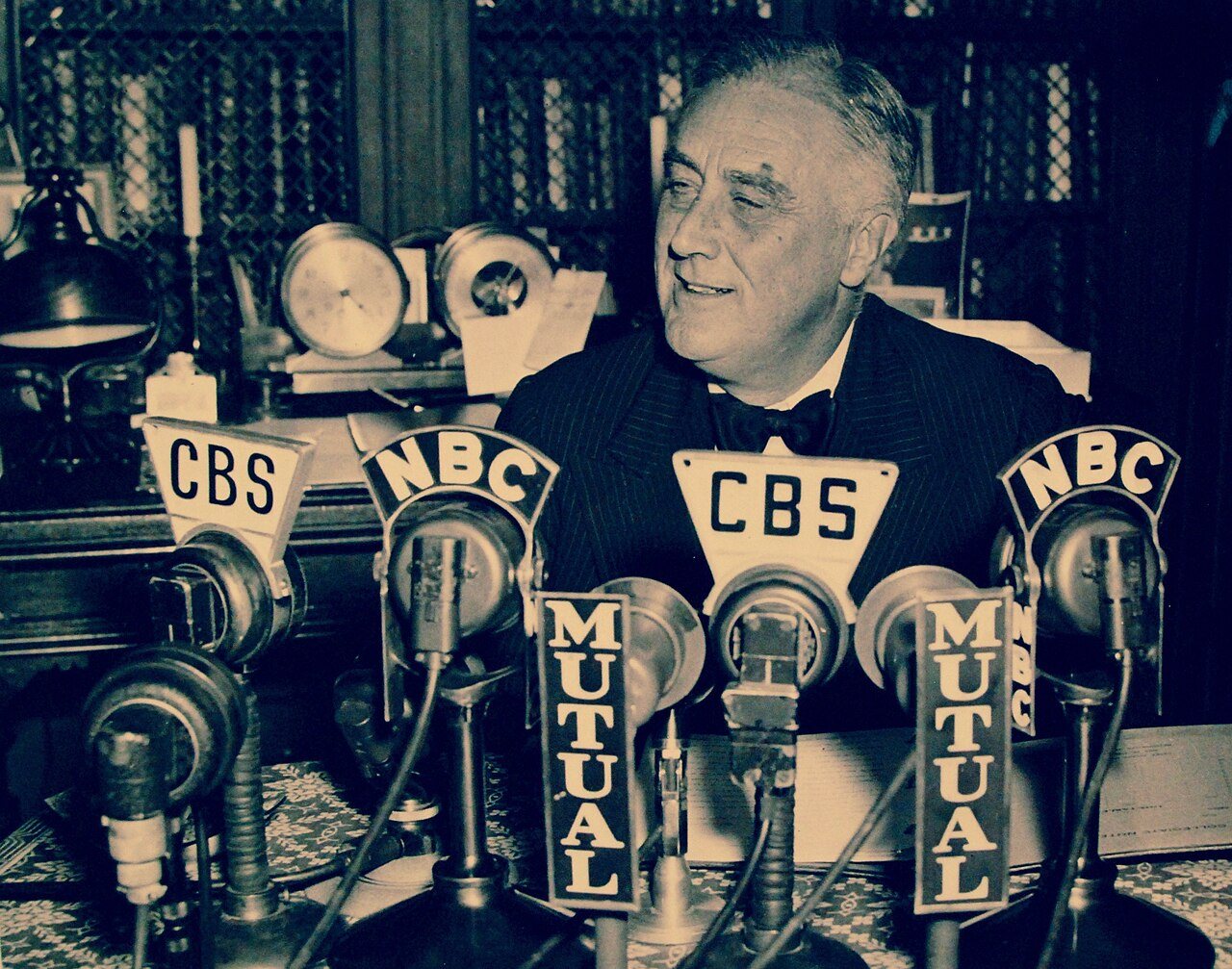
Franklin D. Roosevelt had taken office on March 4, and on March 9 Congress passed his Emergency Banking Act. Still, eight days after his inauguration, the new president faced a country on the edge of panic. Banks across America were closed — many by state governors, and the rest by Roosevelt's own national 'bank holiday' proclaimed on March 6. Millions of people had no idea whether their savings would ever come back. The new president had a plan, a brand-new radio medium, and thirteen minutes.
On Sunday evening, March 12, 1933 — at 10 p.m. Eastern — Roosevelt sat down before the microphones and began with two words: 'My friends.' What followed was the first of his famous fireside chats — a 13-minute, 42-second talk about the banking crisis, delivered in the plain language of a teacher rather than the jargon of a banker. He explained, simply, that banks do not keep your money locked in a vault — they invest it in bonds, mortgages, and loans, putting deposits 'to work to keep the wheels of industry and of agriculture turning around,' as he put it. Roosevelt was the first president to master the new medium of radio, speaking straight into people's living rooms. He described what his administration had done, why, and what would happen next. A CBS reporter listening that night coined a name for this new way of talking to the nation: the 'fireside chat.'
An estimated 60 million Americans tuned in — farmers, factory workers, bankers, and schoolchildren, all hearing the same calm voice at the same hour. It worked. When the banks reopened, deposits exceeded withdrawals. People who had been desperate to pull their money out instead put it back in, because the president had explained the system to them and asked for their trust.
Roosevelt would give about 30 fireside chats over his twelve years in office, on topics from drought to war, with the last one airing in June 1944. Each one treated ordinary listeners as partners in governing rather than bystanders. He proved that a leader who explains honestly, in words anyone can follow, can steady a nation.
The fireside chat did more than save the banks. It changed the presidency itself — from a distant office into a voice in the living room, speaking directly to the people. It is a lesson every leader since has had to learn: trust is built not with slogans, but with clear explanations.
Photo: National Museum of the U.S. Navy, public domain (via Wikimedia Commons).