A Flag Rises at Champ de Mars: Mauritius Goes Free
On March 12, 1968, Mauritius became independent at Port Louis's Champ de Mars, with Seewoosagur Ramgoolam as its first prime minister.
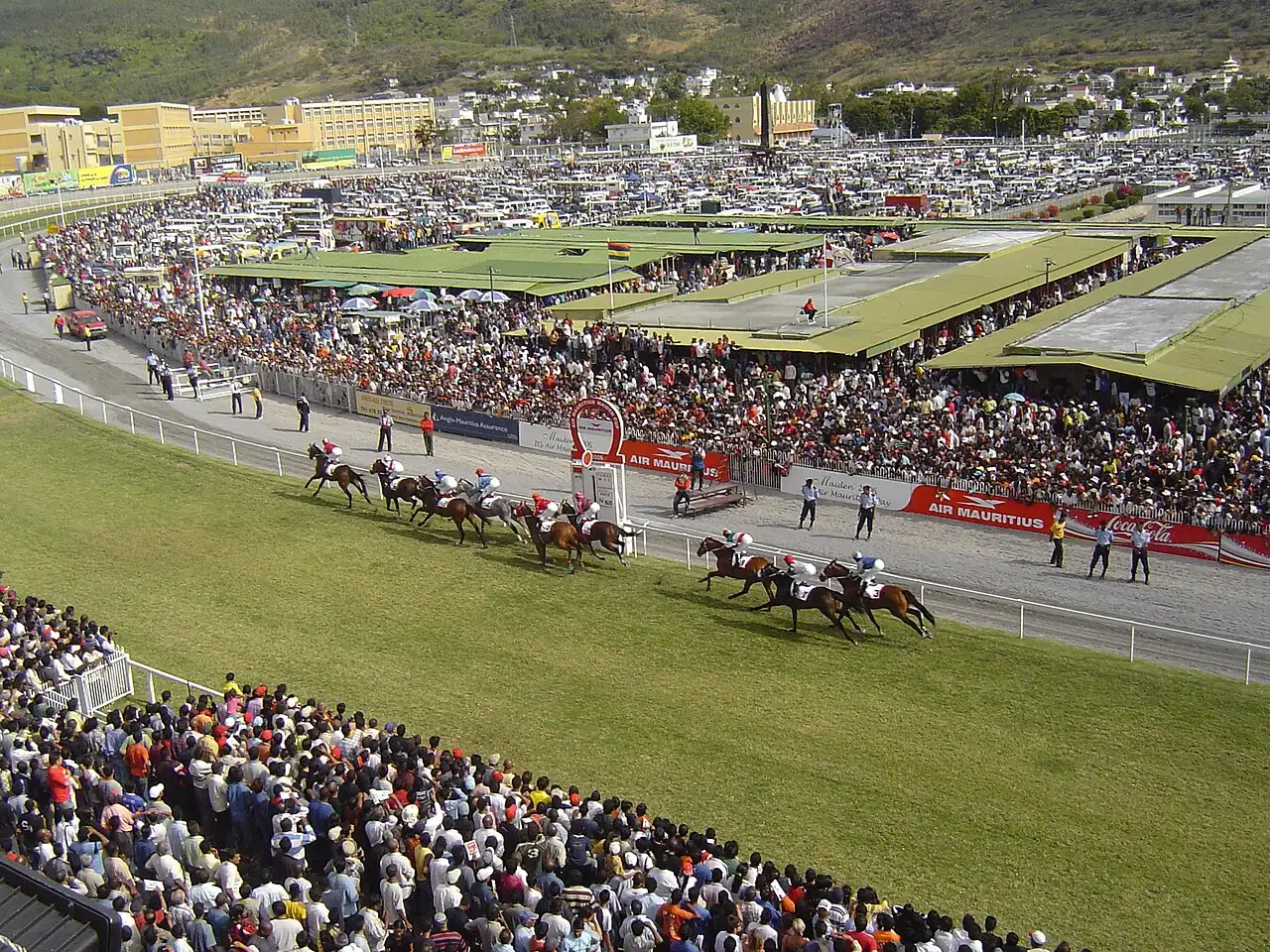
The Champ de Mars in Port Louis, home to the oldest horse-racing club in the southern hemisphere, opened in 1812 when Mauritius was a young British colony. On March 12, 1968, it hosted the greatest contest of all — against history itself. Beneath a tropical sun, before a crowd of thousands, the Union Jack came down and a new flag rose: four horizontal stripes of red, blue, yellow, and green. Mauritius was free.
The road to that flag had been long. Dutch sailors settled the uninhabited island in the 1600s and gave up; the French took it in 1715 and named it the Isle de France, building a sugar colony on enslaved labor. Britain seized it in 1810, during the Napoleonic Wars, and kept it at the Treaty of Paris in 1814. Over the next century and a half, ships brought indentured laborers from India, traders from China, and settlers from France, forging one of the most diverse societies on earth.
The island's very name tells its layered story: the Dutch named it for Prince Maurice of Nassau; the French called it the Isle de France. Mauritius was also the only home of the dodo, the flightless bird that became the world's emblem of extinction — wiped out by sailors and the animals they brought within a century of the Dutch arrival.
By the 1960s, the independence wave was sweeping Africa, and Mauritius — small, remote, and divided — faced a harder question than most colonies: could its Hindu, Creole, Muslim, Franco-Mauritian, and Chinese communities share one nation? Weeks before independence, communal rioting shook Port Louis, and British troops had to keep the peace. But the 1967 election had given a pro-independence coalition, led by the Labour leader Sir Seewoosagur Ramgoolam, its mandate.
So on March 12, before that vast crowd at the Champ de Mars, independence was proclaimed. Ramgoolam became the island's first prime minister, and Mauritius joined the Commonwealth with Queen Elizabeth II as its head of state. Exactly twenty-four years later, on March 12, 1992, the island would become a republic — choosing the same date to complete the journey.
Against the odds, Mauritius became what so many new nations struggled to be: a stable, peaceful democracy. It parlayed sugar into textiles, tourism, and finance, and today ranks among Africa's most prosperous and best-governed countries. The flag raised that day still flies over an island that answered division with democracy — proof that diversity, given a fair start, can be a nation's greatest strength.
Photo: The Champ de Mars Racecourse during the 2006 Maiden Cup. Photo: Hamish Mungur, CC BY-SA 3.0, via Wikimedia Commons.