Andrew's Second Punch: Louisiana, 1992
On August 26, 1992, Hurricane Andrew slammed into Louisiana as a Category 3 storm — its second U.S. landfall in just three days.
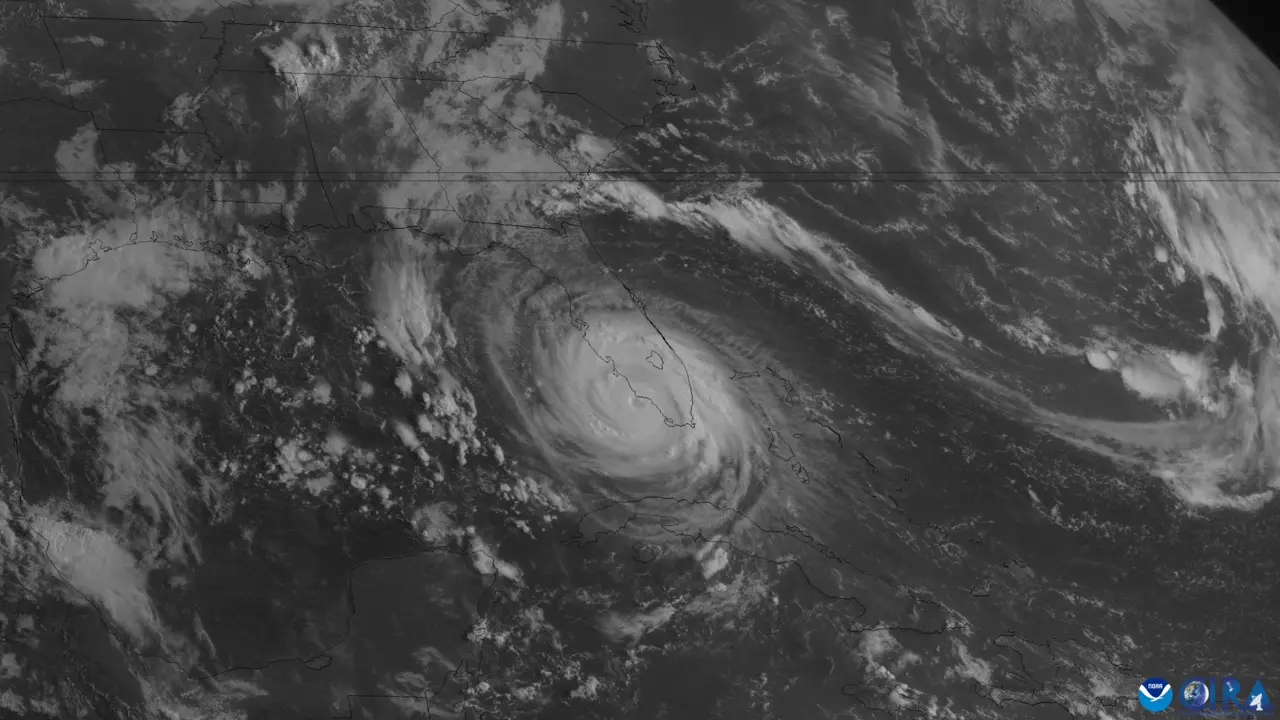
It was the storm that wouldn't quit. Hurricane Andrew had already carved a path of devastation across South Florida on August 24, flattening entire neighborhoods south of Miami with winds that would later be reassessed at Category 5 strength. But instead of dying over land, Andrew marched west into the Gulf of Mexico, gathered strength over the warm water, and set its sights on a second target.
By August 26, the hurricane was bearing down on the Louisiana coast. Forecasters warned of a dangerous storm surge pushing into the low-lying bayous and parishes west of New Orleans. Residents along the central Louisiana coast boarded up homes, moved boats inland, and fled to shelters or higher ground. The state's flat, waterlogged coastline — a maze of marshes, canals, and fishing towns — was brutally exposed to whatever the Gulf sent ashore.
Andrew came ashore near Point Chevreuil, Louisiana, as a Category 3 hurricane with sustained winds of 115 miles per hour. The eye crossed a sparsely populated stretch of coast, which spared Louisiana the worst of the wind — but the storm's vast circulation pushed a wall of water into the marshes and bayous, flooding communities, destroying fishing camps, and tearing apart the region's shrimping and oil-field infrastructure. Tornadoes spun up in the storm's outer bands, adding to the damage across southern Louisiana and into Mississippi.
For Louisiana, the blow was serious but survivable — nothing like the apocalypse Andrew had visited on Florida, where whole subdivisions had been reduced to concrete slabs. But Andrew's second landfall mattered for a different reason: it proved that a hurricane's story doesn't end at the first coastline. Emergency planners took notice. The storm became a case study in how a single hurricane can threaten two completely different regions days apart, and why evacuations and warnings have to account for the storm's entire journey, not just its first strike.
Andrew went on to dissipate over the eastern United States, but its name would never be used again — retired from the rotating list of hurricane names out of respect for the destruction it caused. And in Florida, the storm's catastrophic damage led to the toughest building codes in America, rewritten to make sure no future hurricane could do again what Andrew did.
On August 26, 1992, Louisiana learned what Florida already knew: when a hurricane the size of Andrew comes calling twice, the second knock can be just as frightening as the first.
Photo: GOES satellite imagery of Hurricane Andrew on August 26, 1992 (CSU/CIRA & NOAA), public domain (via Wikimedia Commons).