
A Six-Ton Promise in the Rain: Liberty's Cornerstone Is Laid
On August 5, 1884, in pouring rain, a six-ton block of Connecticut granite was lowered into place on Bedloe's Island — the cornerstone of the Statue of Liberty's pedestal.
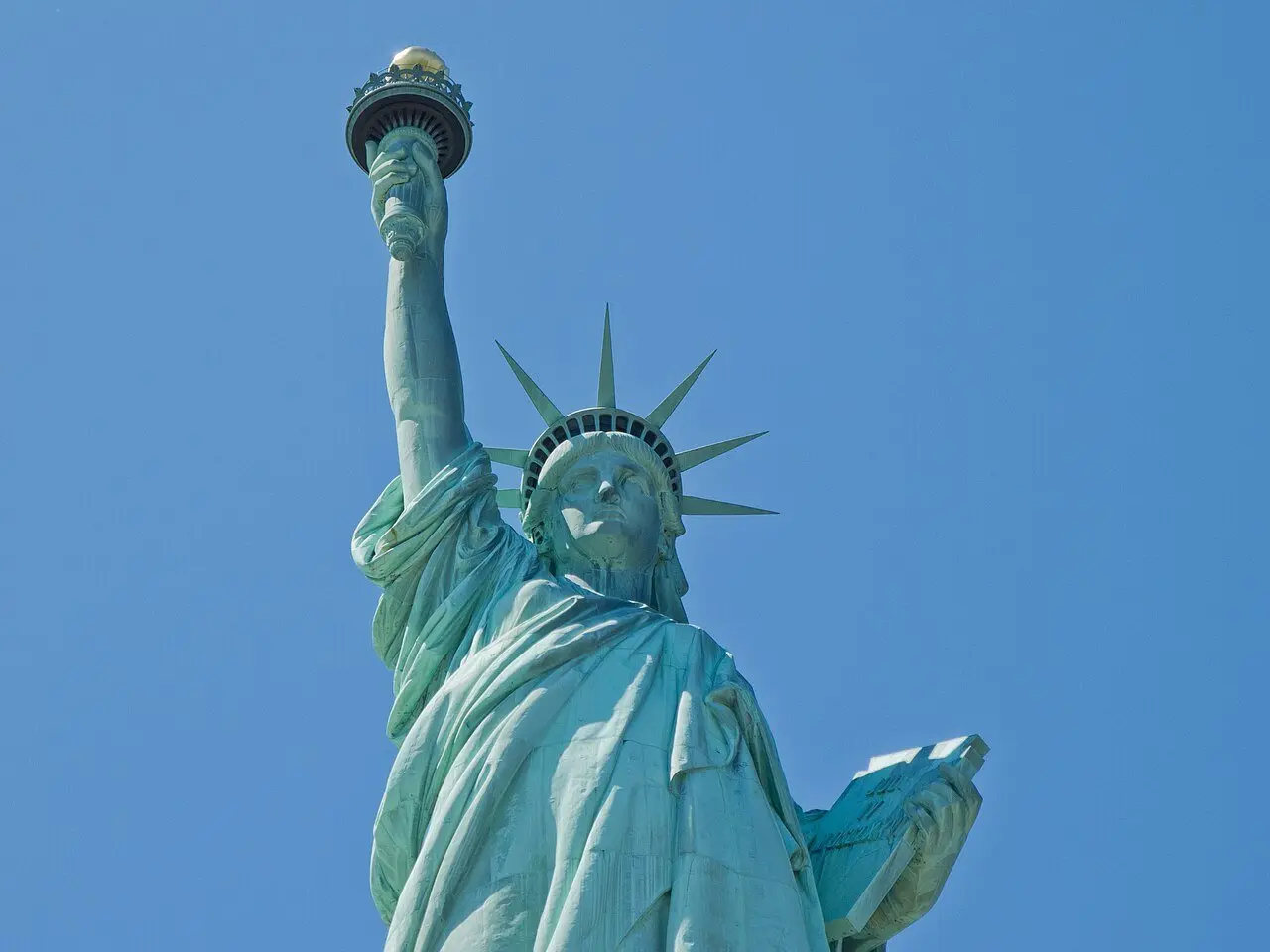
It rained hard on Bedloe's Island on August 5, 1884 — but some 1,500 people came anyway, umbrellas raised, to watch history being lowered by crane. A six-ton slab of pink granite, quarried at the Beattie Quarry in Guilford, Connecticut, swung out over the foundation of a half-built pedestal and settled into its northeast corner. Beneath it, workers sealed a copper box holding a copy of the U.S. Constitution, George Washington's Farewell Address, and bronze medals of every American president through Chester A. Arthur. William A. Brodie, Grand Master of the Grand Lodge of New York, led the formal Masonic cornerstone ceremony. It was the first physical piece of what would become the most recognizable symbol of freedom on Earth.
The backstory was a transatlantic bargain. France would pay for the statue itself — designed by sculptor Frédéric-Auguste Bartholdi, with an innovative iron skeleton engineered by Gustave Eiffel — a gift proposed by the French philosopher Édouard de Laboulaye to celebrate liberty and the friendship between the two republics. But the deal required America to fund and build the pedestal, and by 1884 fundraising had stalled badly, with governments at every level reluctant to spend public money. It would take newspaper publisher Joseph Pulitzer's famous small-donor campaign — raising more than $100,000, most of it in coins and dollar bills from ordinary readers — to finally pay for the granite-clad pedestal designed by architect Richard Morris Hunt, rising inside the walls of old Fort Wood, the eleven-pointed-star fort guarding the harbor.
The timing was almost poetic: just a month earlier, on July 4, 1884, France had formally presented the completed statue to the United States in Paris. But the pedestal still needed paying for, and that is where an unlikely hero entered the story. Newspaper publisher Joseph Pulitzer announced in his paper, the New York World, that he would print the name of every single contributor, no matter how small the gift. The dimes and dollars poured in — most donations were under a dollar — until the fund topped $100,000. The following June, the disassembled statue arrived in New York Harbor aboard the French ship Isère, and on October 28, 1886, President Grover Cleveland dedicated the Statue of Liberty before a cheering crowd — an event celebrated with what is remembered as New York's first ticker-tape parade.
That rain-soaked cornerstone still sits beneath it all. Every immigrant ship that ever passed the statue, every visitor who has climbed to her crown, has stood above the spot where, on a wet August day in 1884, a crowd watched a six-ton promise being set in stone.
Photo: Kadellar, CC BY-SA (via Wikimedia Commons).