
Two Tiny Cartridges That Changed Playtime Forever
On February 27, 1996, Pocket Monsters Red and Green launched for the Game Boy in Japan, starting the Pokémon phenomenon.
On February 27, 1996, Japanese game shops stocked two little grey cartridges for the Nintendo Game Boy that looked like nothing special. They were called Pocket Monsters Red and Pocket Monsters Green, and at first they sold only modestly. But inside those cartridges was an idea that would grow into one of the most beloved entertainment franchises in history.
The idea began with a boy and his bugs. Satoshi Tajiri, the game's creator, had spent his childhood collecting insects in the fields and ponds near Tokyo — hunting, trading, and marveling at the creatures he found. As an adult working in video games, he wondered: what if a game could bottle that joy of the hunt? After pitching the concept to Nintendo in 1990, Tajiri and his small studio Game Freak spent roughly six years building it, even as the aging Game Boy hardware made the task brutally difficult.
The games dropped players into the fictional Kanto region as a young trainer with a big dream: catch wild Pokémon, train them, battle rival trainers, defeat eight Gym Leaders, and ultimately become the Pokémon League Champion. The masterstroke was that no single cartridge contained all 150 creatures. To "catch 'em all," players had to physically connect two Game Boys with a Link Cable and trade — turning a solitary game into a playground-wide social ritual.
The tipping point came when players discovered a secret 151st Pokémon, Mew, hidden deep in the game's code. When the children's magazine CoroCoro announced a giveaway distributing Mew to a handful of lucky entrants, entries poured in — roughly 78,000 of them — and sales of the games exploded. Word of the hidden creature spread through schoolyards like wildfire.
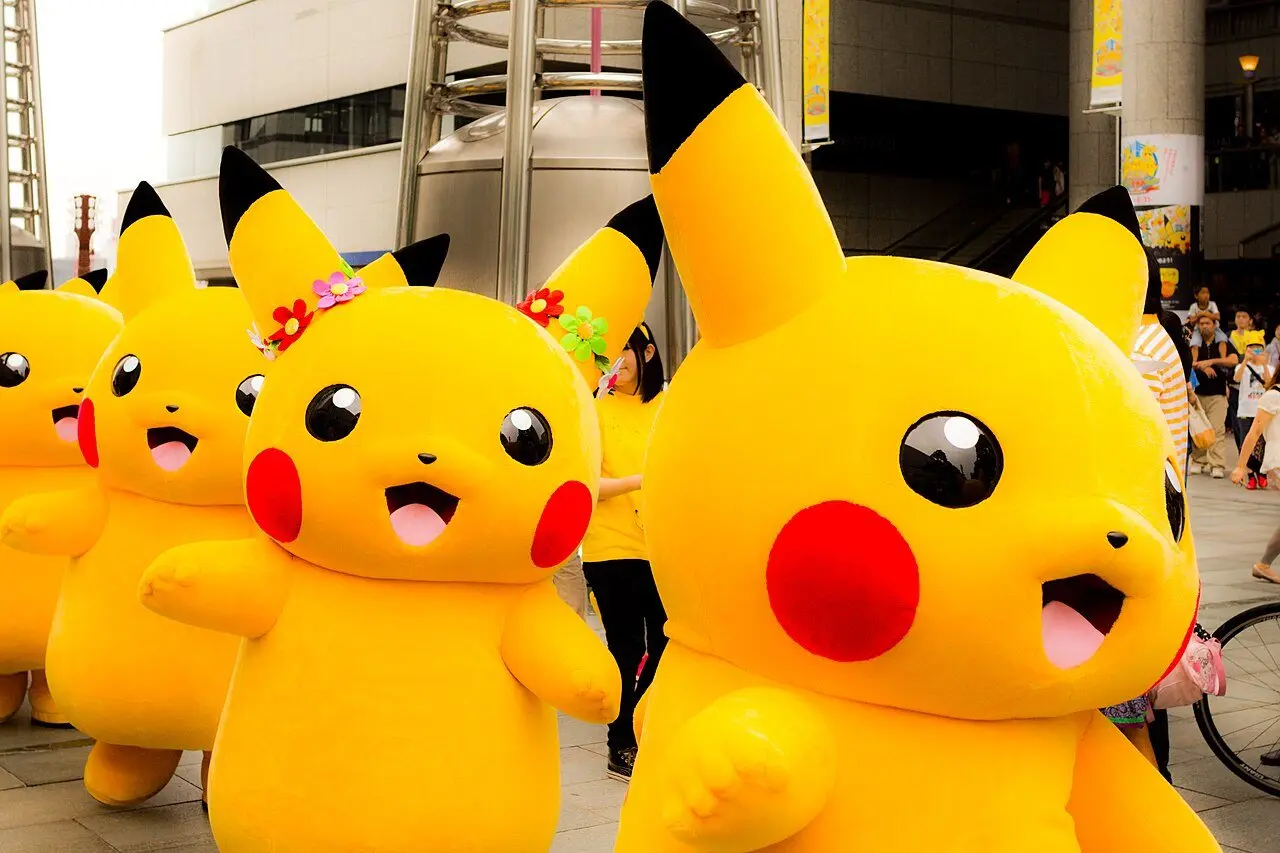
From there, the wave was unstoppable. An enhanced edition followed in Japan, and in 1998 the games crossed the Pacific as Pokémon Red and Pokémon Blue, conquering North America and then Europe. A trading card game arrived, then an anime series starring a trainer named Satoshi — Ash Ketchum in English — and his electric mouse, Pikachu, who would become one of the most recognizable characters on the planet.
Three decades later, the franchise spans dozens of games, movies, and a global community that still celebrates February 27 as Pokémon Day. All of it began with two unassuming cartridges, one man's childhood bug hunt, and an ordinary February morning in 1996.
Photo: Yoshikazu Takada, CC BY 2.0 (via Wikimedia Commons).