
Top of the World: Hillary and Tenzing Summit Everest
On May 29, 1953, Edmund Hillary and Tenzing Norgay stood on the summit of Mount Everest — the first people ever confirmed to reach the top of the world.
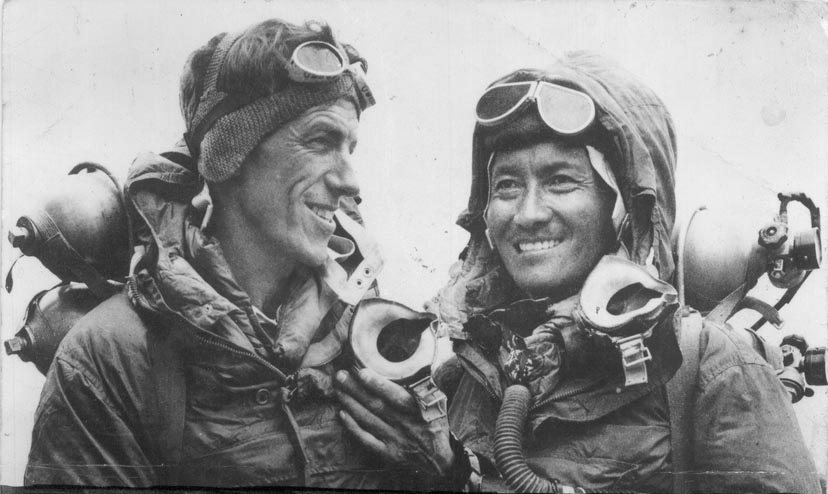
At 11:30 on the morning of May 29, 1953, two exhausted men stood on a small dome of snow at 29,028 feet — the highest point on Earth — and looked down at a world no human being had ever seen from above. Edmund Hillary of New Zealand and Tenzing Norgay of Nepal had just become the first people confirmed to reach the summit of Mount Everest.
Everest had been defying climbers for decades. Eight earlier expeditions had tried and failed, and a Swiss team in 1952 had set a new altitude record without reaching the top. Colonel John Hunt's British expedition was the ninth attempt, and it nearly fell short too: two days before the summit, Tom Bourdillon and Charles Evans turned back just 300 feet below the top, beaten by exhaustion and failing oxygen gear.
Hillary and Tenzing were the second — and final — assault team. The morning of May 29 began badly: Hillary discovered his boots had frozen solid outside their tent, and he spent two hours warming them before they could move. Wearing 30-pound packs, the pair climbed toward the summit, conquering a sheer 40-foot rock face that would later be named the Hillary Step.
They spent only about fifteen minutes on top of the world. Hillary photographed Tenzing posing with his ice axe — but there is no photograph of Hillary himself, because Tenzing offered to take his picture and Hillary, for reasons of his own, declined. Tenzing left chocolates in the snow as an offering; Hillary left a small cross given to him by John Hunt. The descent was treacherous — drifting snow had buried their tracks — and the first person they met on the way down was their friend George Lowe, who had climbed up to greet them with hot soup.
News of the triumph reached London on the very morning of Queen Elizabeth II's coronation, June 2, and the press called it a coronation gift. Hillary and Hunt were knighted by the young queen; Tenzing, ineligible for knighthood as a Nepalese citizen, received the George Medal; and all 37 expedition members received the Coronation Medal.
Why it matters: Everest was the ultimate test of human endurance, and conquering it was a triumph of teamwork — the climbers always insisted the achievement belonged to the whole expedition, not just the two men on top. It taught the world that the highest limits can be reached one careful step at a time.
Photo: Jamling Tenzing Norgay, CC BY-SA 3.0 (via Wikimedia Commons).