The Tallest Tower on Earth, Finished on Leap Day
On February 29, 2012, construction of Tokyo's 634-meter Skytree officially finished — making it the tallest tower in the world, completed on a date that barely exists.
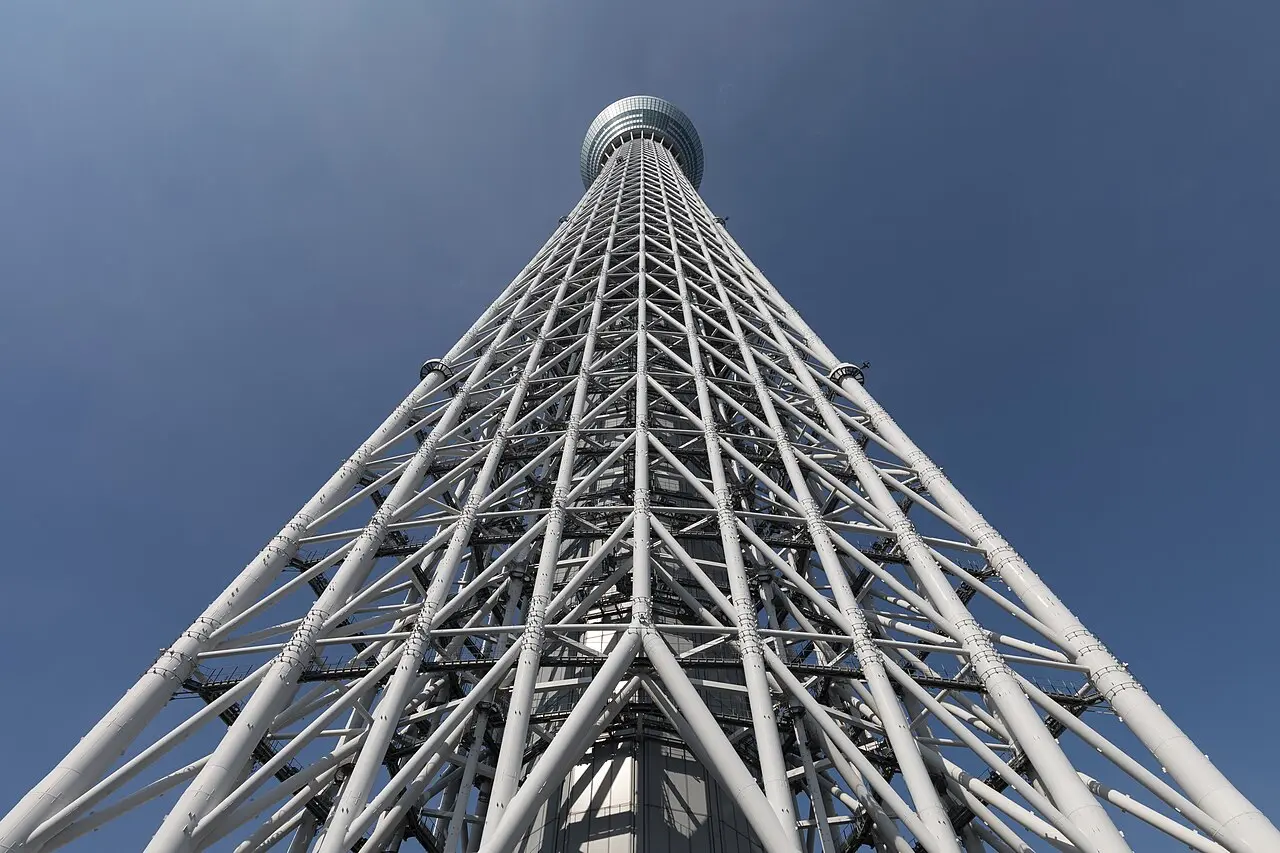
It was completed on a day that only exists every four years — fitting, perhaps, for the tallest tower on Earth.
On February 29, 2012, construction of the Tokyo Skytree officially finished. What rose over the Sumida district of Tokyo was a white steel lattice 634 meters — 2,080 feet — tall, certified the previous November by Guinness World Records as the world's tallest tower.
The Skytree exists because Tokyo outgrew its old tower. By the early 2000s, the new generation of 200-meter skyscrapers in the city center was blocking terrestrial television signals from the 1958 Tokyo Tower, and the region's digital switchover needed a taller antenna. Six broadcasters, the Tobu Railway, architect Nikken Sekkei, and builder Obayashi Corporation joined forces on the answer: a neo-futurist tower whose silhouette echoes Japan's traditional five-story pagodas. The name itself was chosen by national vote in June 2008, beating thousands of alternatives.
The height is a pun. In Japanese, the digits 6-3-4 can be read "Mu-sa-shi" — the old name of the province that once covered this part of the Kantō plain. Construction began on July 14, 2008 and topped out on March 18, 2011 — just one week after the Great East Japan Earthquake shook the unfinished structure, which it survived without major damage. Completion ran about two months behind schedule as the quake and tsunami disrupted supply chains across the country.
At a cost of some 65 billion yen, the tower opened to the public on May 22, 2012, drawing an estimated 1.6 million visitors in its first week. Its two observation decks — at 350 and 450 meters, holding up to 2,000 and 900 people respectively — are served by thirteen elevators and remain among the highest in the world. NHK and J-WAVE began FM transmission from the tower that April, the first step in making it the Kantō region's main broadcast antenna. Tokyo's six main television broadcasters followed in May 2013, completing the long-planned move away from the old Tokyo Tower.
The Skytree matters as more than an antenna. It was built to carry Tokyo's broadcasts into the digital age, but it became a symbol of a city rebuilding itself after disaster — proof that even after the ground itself has moved, a country can still reach for the sky. And the leap-day finish gave it a signature piece of trivia: one of the world's great structures was completed on a date that only comes around every four years.
Photo: Basile Morin, CC BY-SA 4.0 (via Wikimedia Commons)