The President Who Vanished on Leap Day
On February 29, 2004, Haitian president Jean-Bertrand Aristide left the country aboard a U.S. military plane — a disputed departure that ended his presidency and reshaped Haiti's fate.
In the pre-dawn hours of Leap Day 2004, Haiti's president boarded an American military plane and vanished into exile — and whether he resigned or was taken is still argued about today.
Jean-Bertrand Aristide, a former Catholic priest who had risen from Haiti's slums to become, in the words of many observers, the country's most popular politician, was serving his second term as president. His party, Fanmi Lavalas, had swept the disputed parliamentary elections of May 2000, and the opposition boycotted that November's presidential vote — which Aristide won — claiming the process was rigged. International donors responded by suspending financial aid, and the country's troubles deepened. By February 2004, armed rebellion was finishing what politics had started. On February 5, a rebel front led by former police chief Guy Philippe seized Gonaïves, Haiti's fourth-largest city; by February 22 the rebels had taken Cap-Haïtien, the second city, and were closing in on the capital, Port-au-Prince. International attempts to broker a power-sharing deal failed, and France and the United States — Haiti's former colonial ruler and its most powerful neighbor — were openly calling for Aristide to step down.
On the morning of February 29, Aristide left the country aboard a U.S. military aircraft, bound for the Central African Republic. He would eventually settle in South Africa. What happened in those final hours remains disputed: Aristide later said American agents forced him onto the plane and that he had been, in effect, kidnapped — while U.S. officials insisted he had signed a resignation letter and left voluntarily. Looting spread through the capital even as he departed.
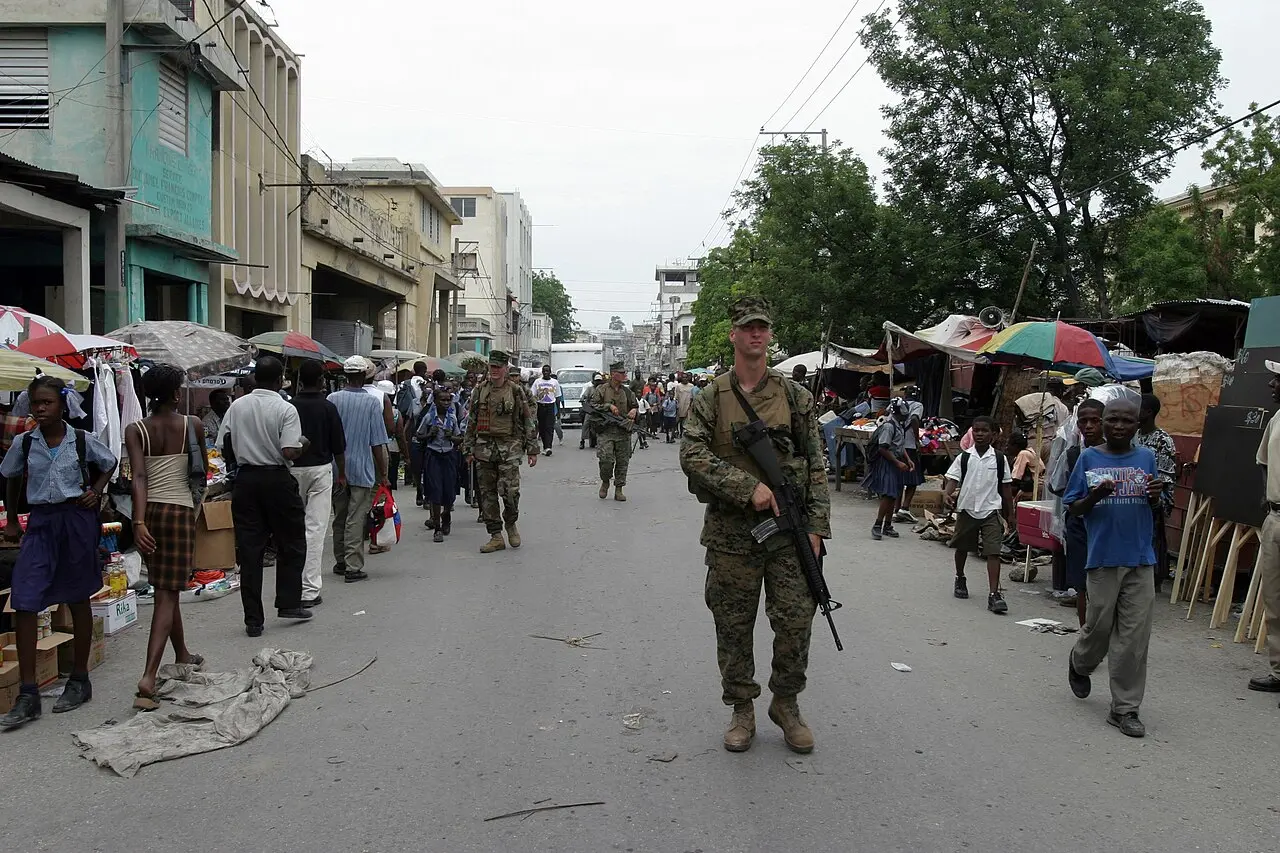
What followed is not in dispute. Chief Justice Boniface Alexandre was installed as interim president, Gérard Latortue became prime minister, and some 2,700 foreign troops deployed under the U.S.-led Operation Secure Tomorrow to halt the slide into chaos. The mission was later replaced by the United Nations Stabilization Mission in Haiti, which would remain in the country for thirteen years.
Aristide returned to Haiti in March 2011, seven years after his departure. The 2004 crisis matters because it exposed the fragility of Haiti's democracy: a popularly elected president removed under murky circumstances, an interim government installed with foreign backing, and a country that would spend the next two decades lurching from one emergency to the next. Leap Day gave the world its strangest political anniversary — a coup that happened on a date that barely exists.
Photo: LCPL Kevin McCall, U.S. Marine Corps, public domain (via Wikimedia Commons)