
The Shrewsbury Boy Who Rewrote the Story of Life
Charles Darwin was born on February 12, 1809, a curious boy whose five-year voyage aboard the Beagle led to the theory of evolution by natural selection.
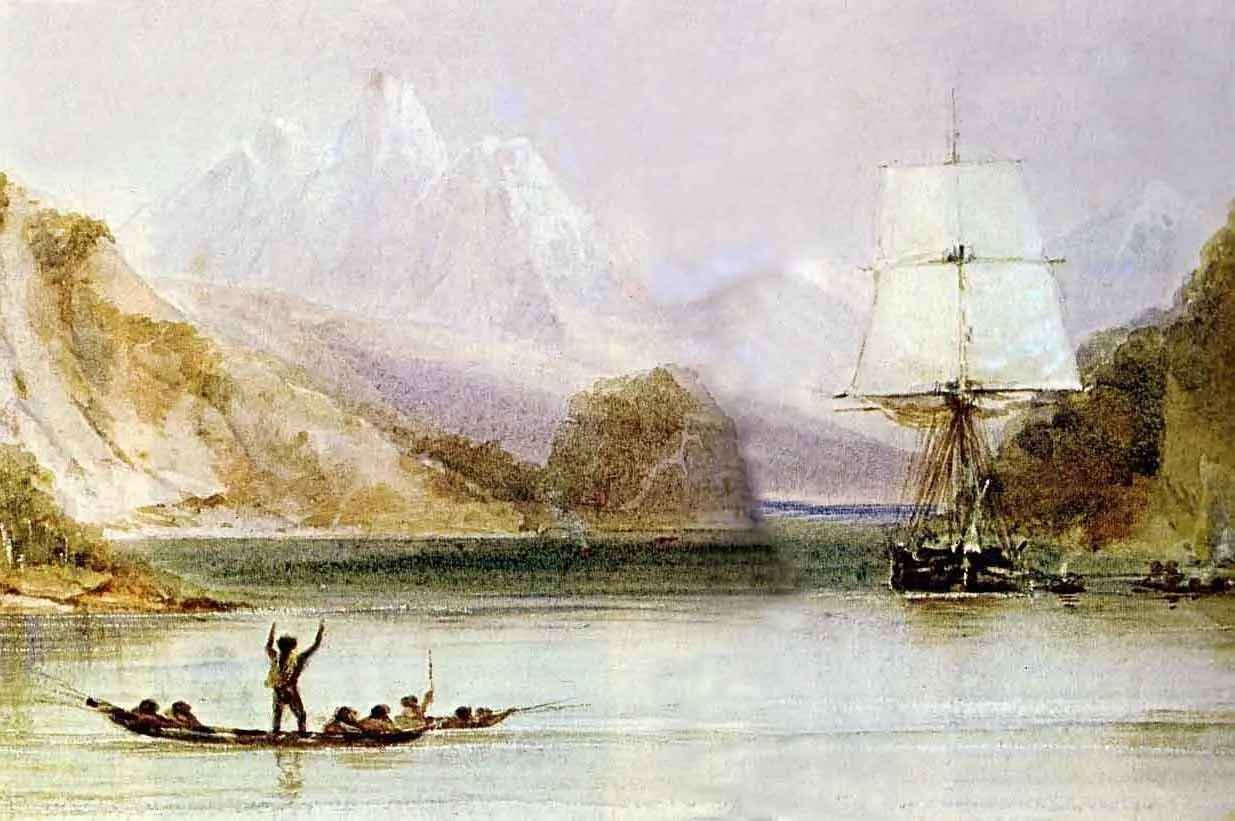
On February 12, 1809, in a comfortable brick house called the Mount in Shrewsbury, England, a baby was born who would change how humanity sees itself. His name was Charles Robert Darwin. On that very same day, across the ocean in a log cabin in Kentucky, another baby was born who would change history too: Abraham Lincoln.
Young Charles was the fifth of six children of a wealthy doctor, Robert Darwin, and Susannah Wedgwood, daughter of the famous pottery maker Josiah Wedgwood. He was not a brilliant student. What he was, from the start, was a collector: beetles, shells, minerals, birds' eggs. He fished for newts in the local ponds and spent long hours wandering the countryside with a hammer, cracking open rocks. When his mother died in 1817, he was only eight, and the outdoors became even more of a refuge.
His father sent him to Edinburgh to study medicine, but Charles found lectures dull and surgery horrifying. He switched to Cambridge, planning to become a country clergyman, and spent more time collecting beetles and botanizing than studying theology. Then came the invitation that changed everything. On the recommendation of his botany professor, the 22-year-old Darwin was offered a place aboard HMS Beagle, a Royal Navy brig setting out on a five-year surveying voyage around the world. He sailed in late December 1831 and did not return until October 1836.
The voyage was Darwin's real university. He spent more than 500 days at sea and about 1,200 days on land, filling notebooks with observations of fossils, coral reefs, earthquakes, and the strange animals of the Galapagos Islands. The mockingbirds and finches of those islands, slightly different from island to island, planted a question in his mind that would not let go: could species change over time?
Back in England, Darwin spent more than twenty years testing that question, breeding pigeons, dissecting barnacles, and corresponding with naturalists worldwide. In 1858 he received a shock: a younger naturalist, Alfred Russel Wallace, had independently arrived at the same idea. The two men's papers were presented together before London's Linnean Society, and the following year, on November 24, 1859, Darwin published On the Origin of Species. Its argument was simple and world-shaking: all living things descend from common ancestors, and the engine of change is natural selection, the process by which organisms best adapted to their environment survive and leave more offspring.
The book ignited a storm of controversy, but the evidence kept accumulating, and by the time Darwin died in 1882, evolution was broadly accepted by scientists. He was buried in Westminster Abbey, near Isaac Newton.
Every February 12 is now celebrated as Darwin Day. Not bad for a boy who mostly wanted to be outside.
Image: Conrad Martens, public domain (via Wikimedia Commons).