
The Mahatma's Last Evening
On January 30, 1948, Mahatma Gandhi was assassinated at a prayer meeting in New Delhi, ending the life of the leader who guided India's freedom struggle.
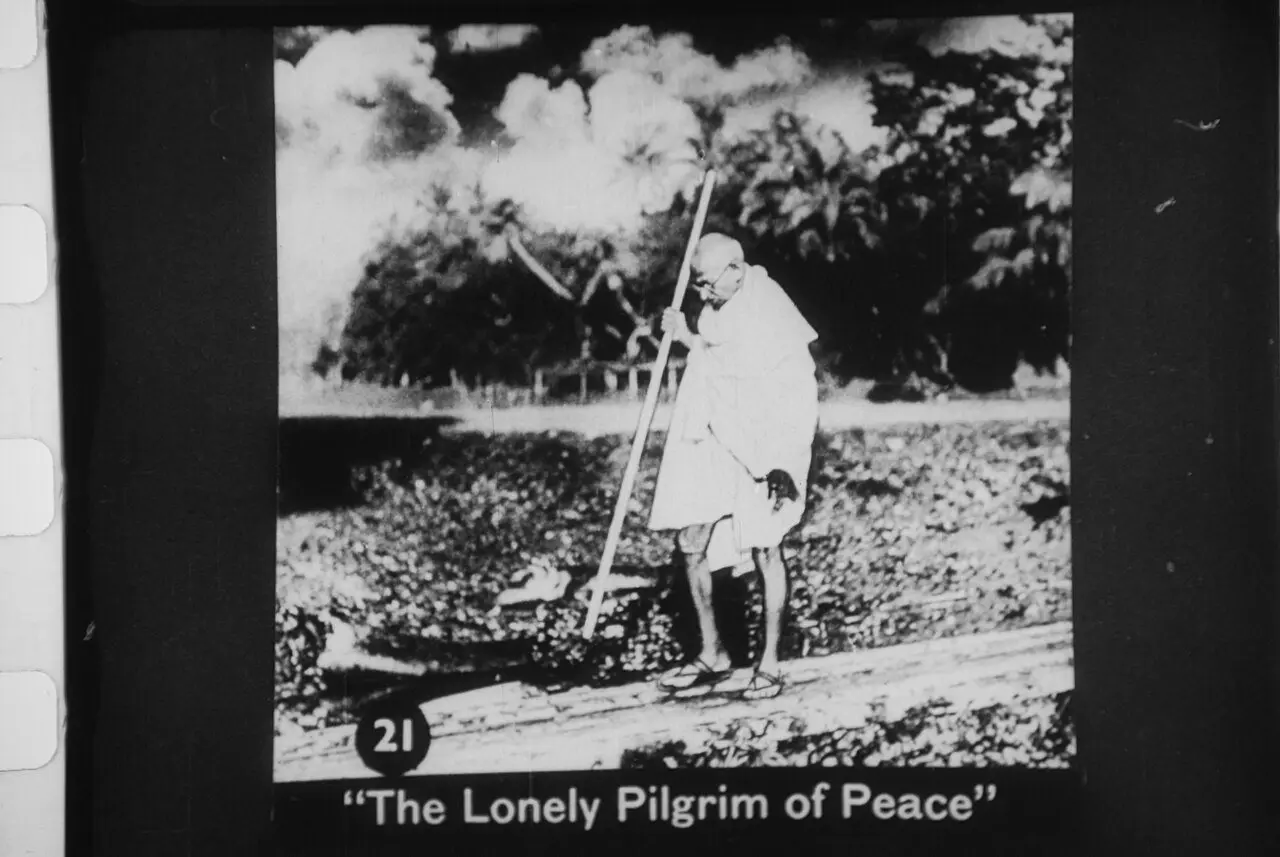
On the evening of January 30, 1948, an elderly man in a simple white shawl walked across the lawn of Birla House in New Delhi toward his evening prayer meeting, as he did every day. Minutes later, three gunshots ended the life of Mohandas Karamchand Gandhi — the Mahatma, the "great soul" who had led India's nonviolent struggle for independence.
Gandhi was 78 and had spent the previous months fasting and traveling through communities torn by the violence that followed Partition — the division of British India into India and Pakistan in August 1947, which had left hundreds of thousands dead in religious clashes. Wherever he went, he preached that Hindus and Muslims could live together; the multi-faith prayer meetings at Birla House were part of that mission.
His assassin, Nathuram Godse, a 37-year-old Hindu nationalist from Maharashtra, stepped from the crowd and fired three bullets at point-blank range. He was seized on the spot and handed to the police. Godse later said he blamed Gandhi for being too accommodating toward Muslims during Partition — a grievance the trial would explore at length.
The trial opened in Delhi's historic Red Fort later that year. In November 1949, Godse and his co-conspirator Narayan Apte were sentenced to death. In a final, remarkable act of the philosophy Gandhi had taught, Gandhi's own sons, Manilal and Ramdas, pleaded for the killers' lives to be spared. India's leaders — including Prime Minister Jawaharlal Nehru — declined the plea, and Godse and Apte were hanged at Ambala jail on November 15, 1949.
Gandhi had lived to see independence, but only barely — his death came less than six months after August 1947. The man who had freed a nation through nonviolence was killed by violence, and the irony has never left the story. But neither has his influence: his philosophy of satyagraha — truth-force, nonviolent resistance — went on to shape movements for civil rights and freedom across the world, from America to South Africa.
India observes January 30 as Martyrs' Day. Today the grounds of Birla House are the Gandhi Smriti museum, and the exact spot where he fell is marked by a simple memorial — a quiet place that draws visitors every January 30.
He is gone, but the barefoot figure with the staff — seen in a 1946 newsreel walking the fields of Noakhali, trying to stop the bloodshed — remains one of history's clearest images of conscience in action.
Photo: unknown author, public domain (via Wikimedia Commons).