
The Machine That Beat the King
On May 11, 1997, IBM's Deep Blue won the final game of its rematch against Garry Kasparov, becoming the first computer to defeat a reigning world chess champion in a match.
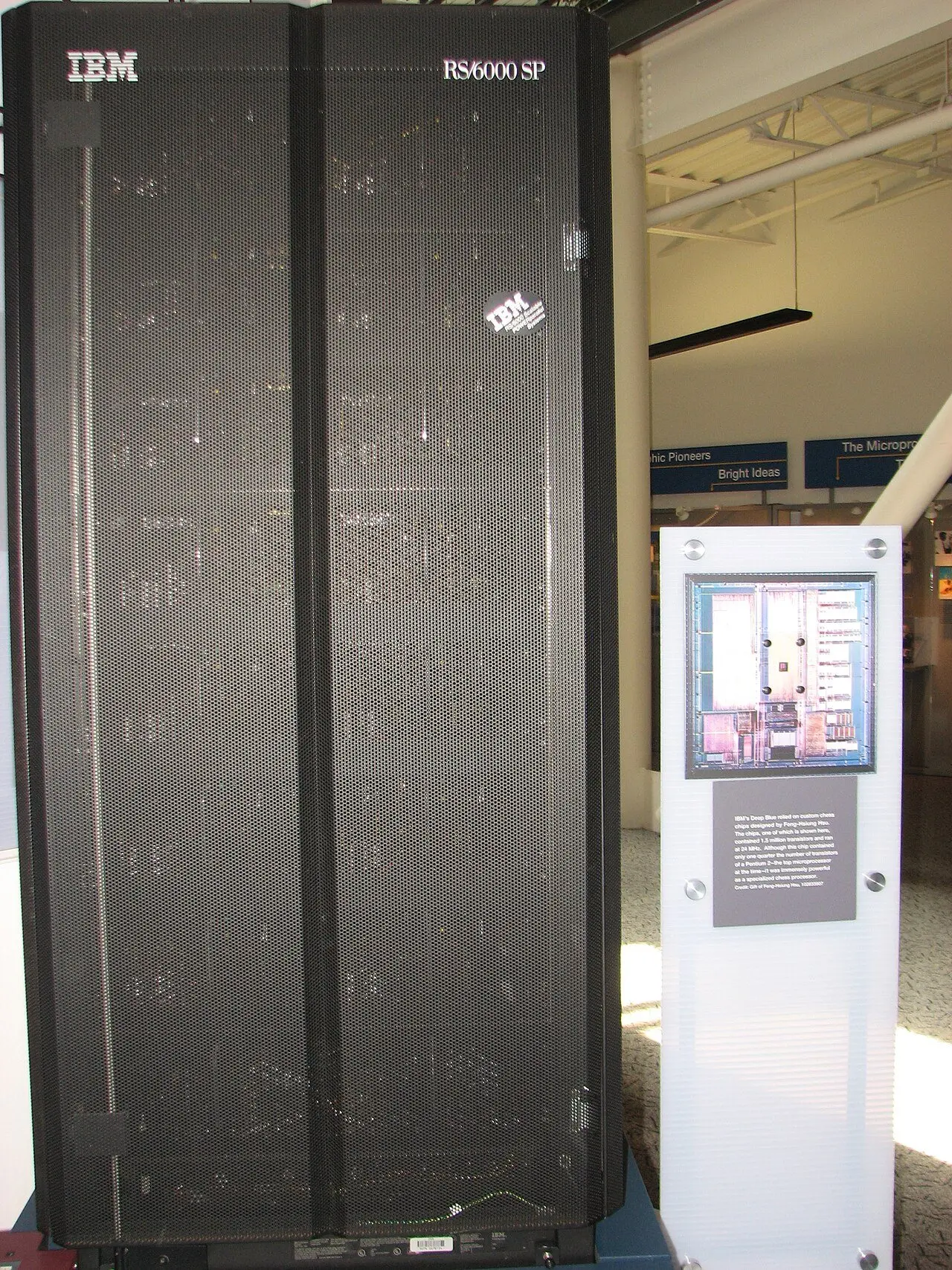
On the afternoon of May 11, 1997, in a Manhattan office tower, the greatest chess player alive tipped over his king in defeat — after just 19 moves, and barely an hour of play. His opponent was not a man. It was a machine called Deep Blue.
Garry Kasparov had been world champion since 1985, when he beat Anatoly Karpov at age 22 to become the youngest champion in history. A year earlier, in Philadelphia, he had faced Deep Blue's predecessor and won 4–2 — though the computer stunned the world by winning the first game, the first time a computer had beaten a reigning champion in a classical game under tournament rules. The 1997 rematch was the revenge the whole world watched.
It did not go as planned. Kasparov took the first game, but Deep Blue answered in Game 2 — a loss so strange that Kasparov later claimed the computer must have had human help. Three tense draws followed. In the decisive sixth game, Kasparov reached for an opening he rarely played, the Caro-Kann, hoping to drag the machine out of its prepared lines. On move 8, Deep Blue answered with an aggressive knight sacrifice on e6 that Kasparov never saw coming. It had been programmed into the computer's opening book in advance. Within a few more moves the position was, by later analysis, objectively lost. At move 19, Kasparov resigned.
The final score: Deep Blue 3.5, Kasparov 2.5. For the first time, a computer had defeated a reigning world chess champion in a match under standard tournament time controls.
Deep Blue itself was the product of a long quest. It began as ChipTest, a project by Carnegie Mellon doctoral student Feng-hsiung Hsu in 1985, who joined IBM in 1989 along with Murray Campbell to build a machine that could beat the best human in the world. Its name was a play on Deep Thought — an earlier chess machine — and Big Blue, IBM's nickname. At its peak it could evaluate up to 200 million chess positions every second.
Kasparov accused IBM of cheating and demanded a rematch. IBM declined and retired Deep Blue. But the deeper story outlived the controversy. For centuries, chess had been treated as proof that the human mind could not be mechanized. On May 11, 1997, that argument ended. Today, every grandmaster trains with the descendants of Deep Blue — the machine did not kill chess, it taught humans to play it better.
Photo: Erik Pitti, CC BY 2.0 (via Wikimedia Commons).