Murder in the Lobby of the Commons
On May 11, 1812, a ruined merchant shot Prime Minister Spencer Perceval dead in the lobby of the House of Commons — the only assassination of a serving British prime minister.
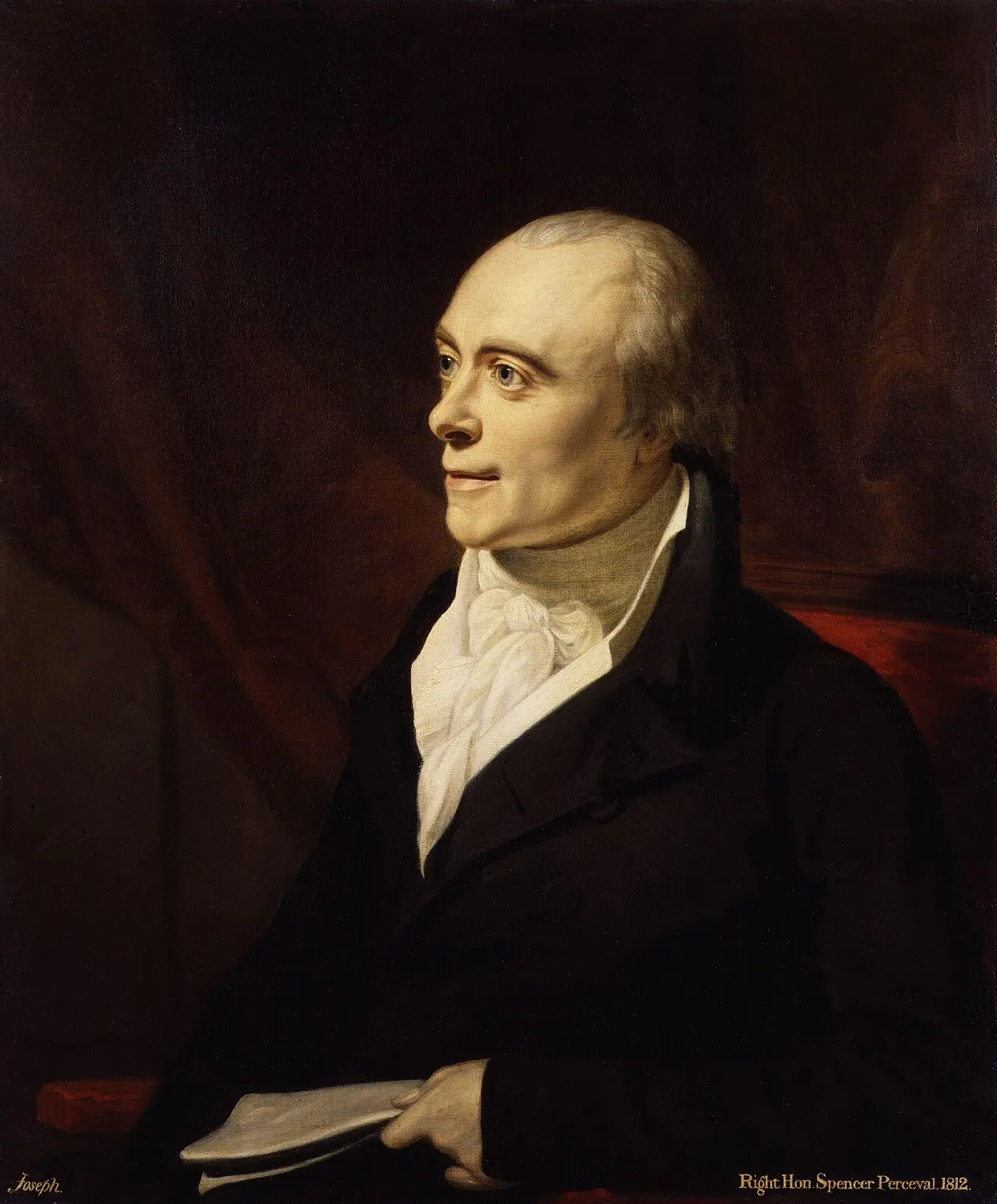
At about a quarter past five on the evening of May 11, 1812, Spencer Perceval walked into the lobby of the House of Commons on his way to an evening session — and never walked out. A man stepped from the crowd, drew a pistol, and fired a single shot into the prime minister's chest.
Perceval staggered, cried out — witnesses variously heard "murder" and "oh my God" — and collapsed. He was carried into an adjoining room and laid on a table, blood issuing from his mouth. Within minutes the pulse faded, and he was gone. He was 49 years old.
The killer made no attempt to escape. He sat down calmly on a bench and waited to be seized. He was John Bellingham, a Liverpool merchant with a grievance that had curdled into obsession. Years earlier he had been imprisoned in Russia for five years over a trading debt, and he believed the British government owed him compensation for abandoning him there. Every petition had been refused. On April 20 he had bought two .50-calibre pistols from a gunsmith on Skinner Street and had a tailor sew a secret pocket into his coat. He had been haunting the Commons lobby for days, waiting.
Bellingham was tried just four days later at the Old Bailey, convicted, and hanged at Newgate Prison on May 18 — one week after the murder, and one month before Britain and America went to war in the War of 1812. Later historians would call the rush to the gallows a miscarriage of justice; there were serious questions about his sanity. But the law of 1812 had little patience for such questions.
Perceval remains the only British prime minister ever assassinated. He had led the Tory government since 1809 through the grinding Napoleonic Wars, and his hardline economic policies had brought real misery — in the hardest-hit districts, news of his death was met with open rejoicing. He left a widow and twelve children, aged three to twenty, and just £106, 5 shillings and a penny in the bank; a shocked Parliament voted £50,000 to provide for the family.
The murder is a window into a harsher age: an era when a prime minister could be shot in his own parliament by a lone, aggrieved man with a pistol — and when justice could hang that man within the week. More than two centuries later, no other British premier has met such an end. May 11, 1812 stands alone.
Photo: George Francis Joseph, public domain (via Wikimedia Commons).