
The Lusitania Goes Down
On May 7, 1915, the German submarine U-20 torpedoed the British liner Lusitania off the coast of Ireland, killing nearly 1,200 people and turning world opinion against Germany.
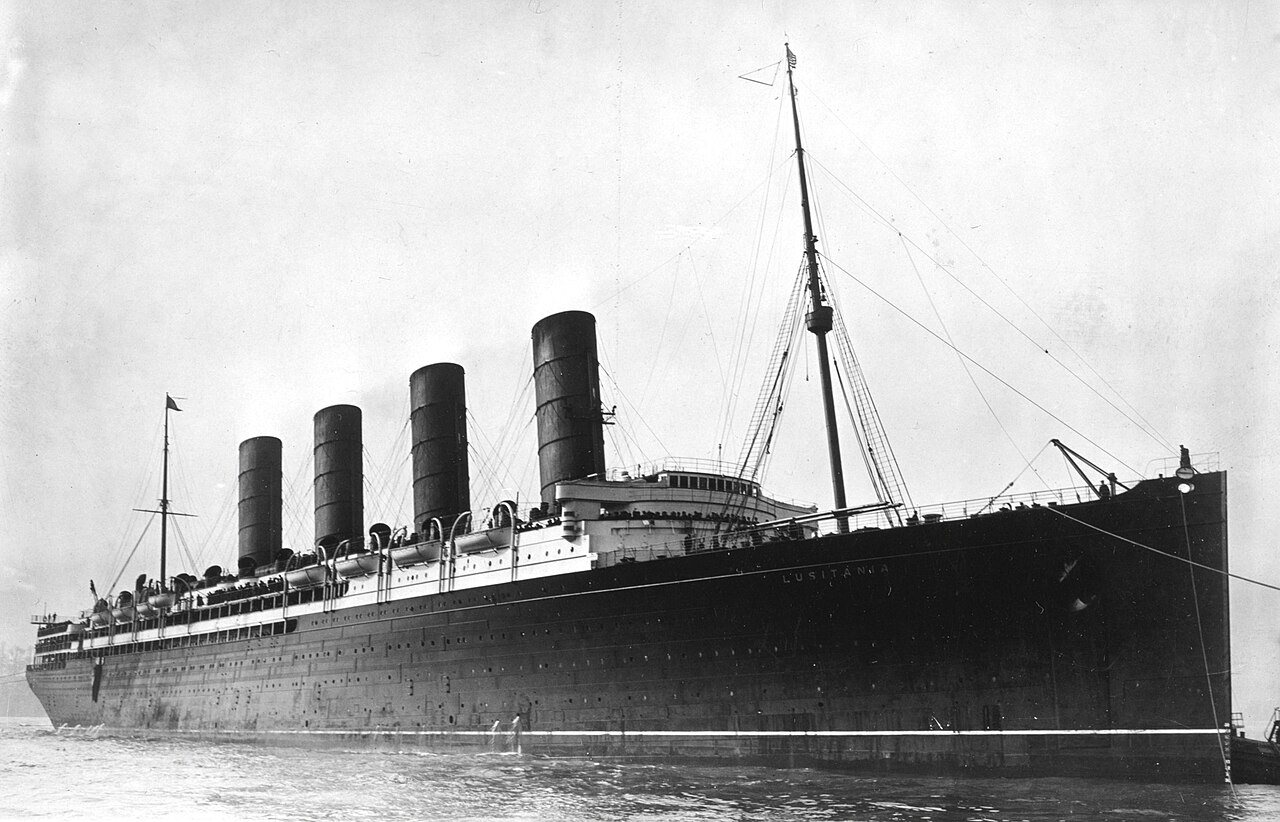
May 7, 1915, dawned bright and clear off the coast of southern Ireland. The morning fog had lifted, and the passengers aboard the RMS Lusitania — the fastest, most luxurious liner on the seas — were finishing lunch and counting the hours until they reached Liverpool.
The Lusitania was a British-registered Cunard liner, launched in 1906 and famous for her speed and elegance. She had sailed from New York on May 1 with 1,959 people aboard. The world was nine months into World War I, and Germany had declared the waters around the British Isles a war zone. The morning she sailed, the Imperial German Embassy had published a notice in American newspapers warning travelers that British ships entering the zone risked submarine attack. Most passengers brushed it off — surely no one would sink a great ocean liner.
Just after 2 p.m., about 11 nautical miles off the Old Head of Kinsale, Kapitänleutnant Walther Schwieger of the German submarine U-20 spotted the liner through his periscope. From about 700 meters away he fired a single torpedo. It struck below the waterline, and moments later a second explosion tore through the ship. The "Greyhound of the Seas" was gone in eighteen minutes, sinking at 2:28 p.m.
The crew scrambled to launch the lifeboats, but the ship's severe tilt made it nearly impossible — only six boats got away for the 1,959 people aboard. Of the 1,959 men, women, and children on board, 1,195 died, including about 128 Americans. Rescue ships raced out from Ireland after picking up the Lusitania's distress call, but for most of the passengers and crew, help came too late.
The German Embassy's warning had been startlingly direct: American newspapers carried its notice the very morning the Lusitania sailed, alerting travelers to the danger of entering the war zone aboard a British ship. Some passengers were alarmed and considered canceling; most sailed anyway, trusting the liner's famous speed — she could outrun any submarine, they believed.
Captain William Turner knew U-boats were active in the area — three ships had been sunk nearby in the days before. But slowed by fog and sailing in a straight line close to shore rather than zigzagging in open water, as Admiralty instructions advised, the liner passed directly in front of U-20. Schwieger, a 30-year-old officer, deliberated only briefly before giving the order to fire.
President Woodrow Wilson kept the United States neutral for nearly two more years, but the sinking hardened American opinion against Germany. When America finally entered the war on April 6, 1917, images of the stricken liner were everywhere — on recruiting posters and propaganda sheets. Historians call the Lusitania a turning point in the history of modern warfare: the moment when civilian passenger ships, with women and children aboard, had become targets, and the old rules of "gentlemanly" war gave way to an era of total warfare.
Photo: George Grantham Bain, public domain (via Wikimedia Commons).