
The Louisiana Purchase: America's Greatest Bargain
On April 30, 1803, the Louisiana Purchase treaty was dated in Paris, doubling the size of the United States overnight.
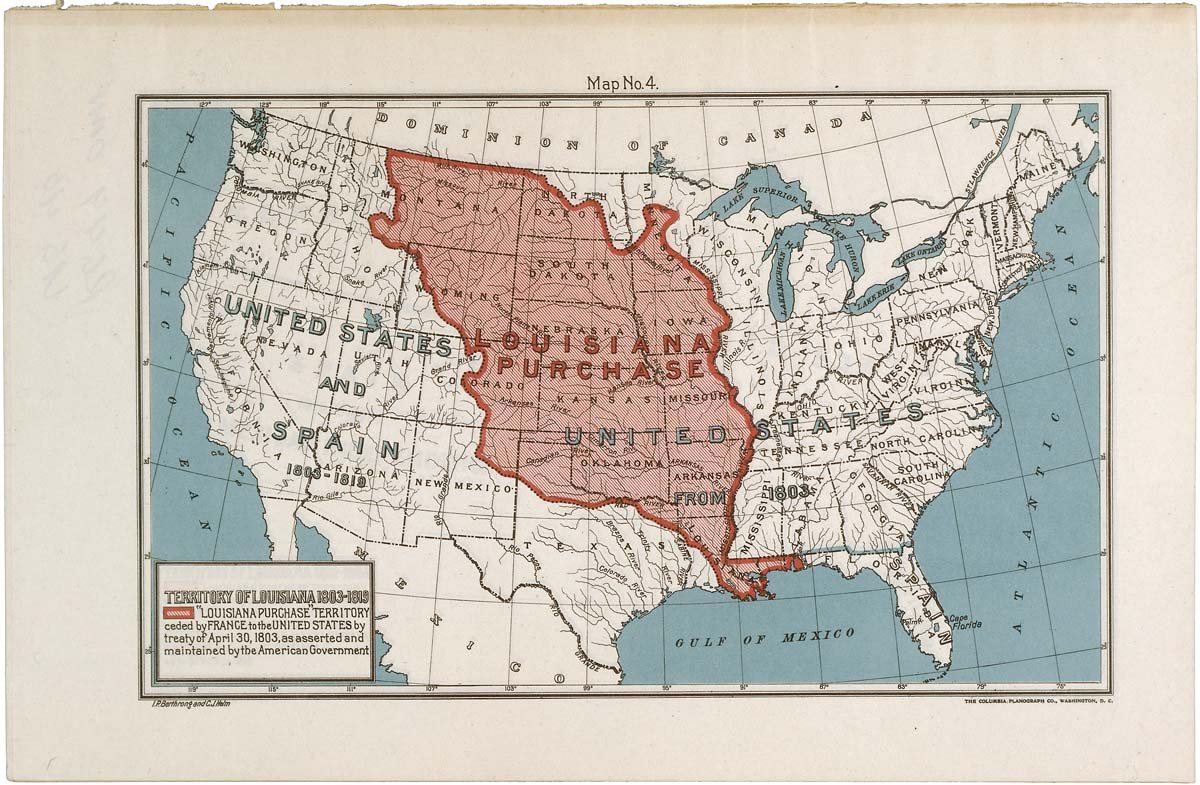
The United States sent two men to Paris to buy a port. They came home having bought a third of a continent. The treaty that did it was drawn up in Paris and bears the date April 30, 1803: France sold America some 828,000 square miles of territory west of the Mississippi River for $15 million — roughly three cents an acre, the greatest real-estate bargain in American history.
President Thomas Jefferson had modest goals. He wanted to secure American trade on the Mississippi River, and he feared what would happen if France — which had just regained Louisiana from Spain — closed the port of New Orleans to American merchants. He instructed his minister in Paris, Robert Livingston, and sent James Monroe to help him, authorizing them to offer up to $10 million for New Orleans and its surroundings.
But Napoleon Bonaparte had bigger problems. His attempt to crush a slave revolution in Haiti had failed disastrously, war with Britain was about to resume, and he needed money for his European campaigns far more than he needed a vast territory an ocean away. On April 11, the French foreign minister Talleyrand startled Livingston with an unexpected question: "What will you give for the whole?" He meant not just New Orleans, but all of Louisiana.
Livingston and Monroe barely paused. Afraid Napoleon might change his mind, they closed the deal before they could even inform Jefferson — agreeing to pay $11.25 million and to assume $3.75 million in debts France owed to American citizens, for a total of $15 million. The treaty was dated April 30 and signed on May 2. Back home, Jefferson's Federalist opponents howled that the purchase was unconstitutional; Jefferson held firm, and the Senate ratified it that October. France formally transferred authority that December. The United States had to borrow the money from European banks at six percent interest and did not finish paying it off until 1823.
The scale of it is hard to grasp: the purchase more than doubled the size of the young nation, stretching from the Mississippi to the Rocky Mountains and from the Gulf of Mexico to the Canadian border — land that would become all or part of fifteen present-day states. That same year, the Lewis and Clark expedition set out to explore what America had just bought.
The Louisiana Purchase set the course for westward expansion and made the United States a continental power. It is worth remembering, too, that the millions of acres changing hands on paper were home to Native nations who were never consulted — the deal was struck between two empires over their heads.
Image: U.S. National Archives, public domain (via Wikimedia Commons).