Emperor Akihito Abdicates the Throne
On April 30, 2019, Japan's Emperor Akihito stepped down from the Chrysanthemum Throne — the first imperial abdication in more than 200 years.
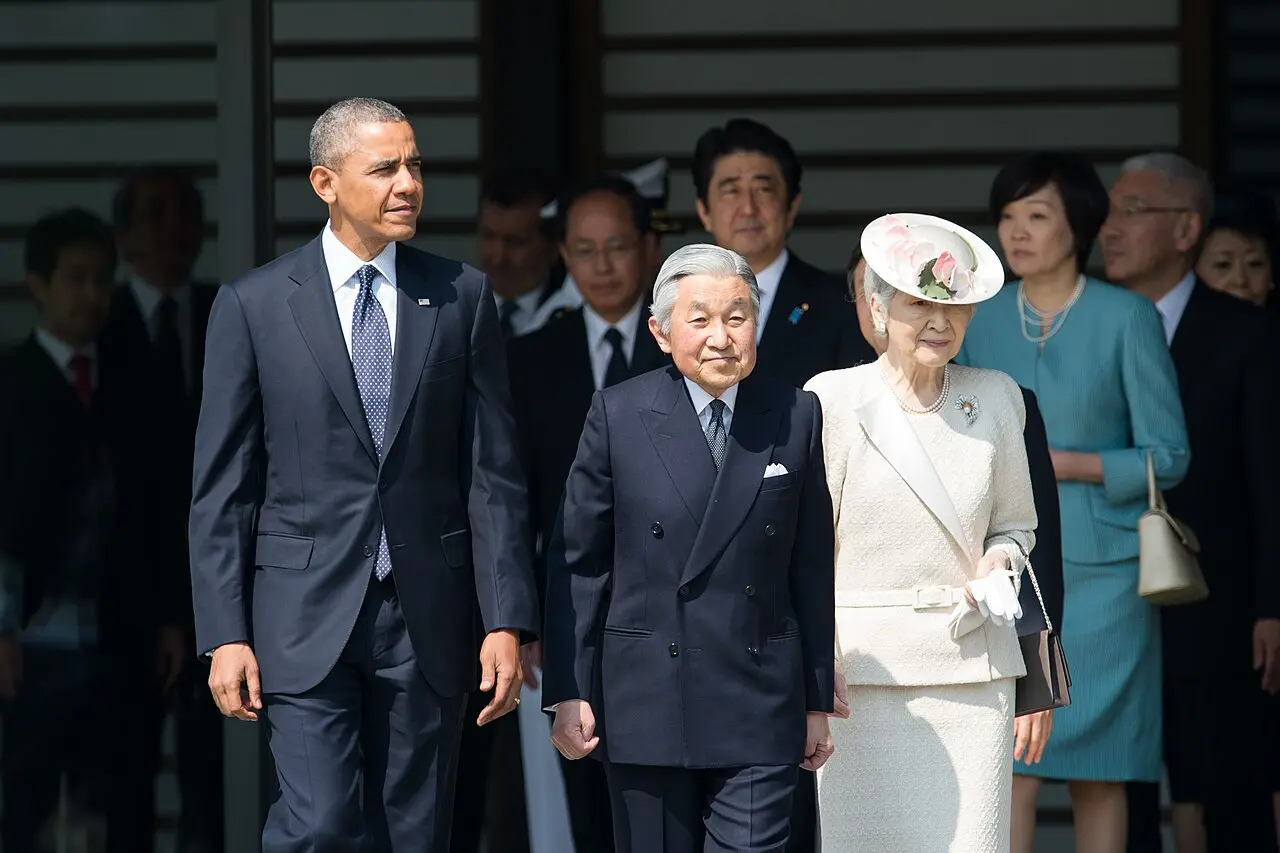
No Japanese emperor had retired in 202 years. On April 30, 2019, the 85-year-old Akihito did what none of his predecessors in two centuries had done: he stepped down.
Akihito was born on December 23, 1933, the eldest son of Emperor Hirohito, and ascended the Chrysanthemum Throne in 1989 after his father's death — beginning the 30-year Heisei era, whose name means "achieving peace." He was the first emperor to reign entirely under Japan's postwar constitution, which reduced the monarchy to a purely symbolic role, and the first to marry a commoner: Michiko Shoda, in 1959.
Where his father had been remote, Akihito worked to bring the imperial family "closer to the people." He and Empress Michiko made official visits to 18 countries and to all 47 of Japan's prefectures. He knelt to comfort survivors of earthquakes, the 2011 tsunami, and the Fukushima nuclear disaster. A staunch pacifist, he repeatedly expressed remorse for Japan's actions during the Second World War — words that carried weight across Asia.
In August 2016, in a rare televised address, he signaled that his age and declining health made him worry he could no longer fulfill his duties. There was just one problem: Japanese law provided no way for an emperor to abdicate. In June 2017, parliament passed a special one-time law applying to Akihito alone.
The abdication itself, on April 30, 2019, was a day of ritual. At dawn, following Shinto tradition, Akihito reported his decision to the sun goddess Amaterasu. That evening, in a televised ceremony at the Imperial Palace in Tokyo, the sword and the jewel — two of the three sacred treasures symbolizing the throne, the third being a mirror that never leaves the palace — were placed before him. "Today, I am concluding my duties as the emperor," he said, closing with a wish for "peace and happiness for all the people in Japan and around the world."
The next morning, Crown Prince Naruhito ascended the throne, and the Reiwa era began — the name, unveiled on April 1 by chief cabinet secretary Yoshihide Suga, roughly means "beautiful harmony." A lifelong marine biologist, he published dozens of scientific papers on goby fish — an emperor who was also a genuine, peer-reviewed scientist.
After 30 years of quiet, people-first symbolism, Japan's most beloved modern emperor chose his own ending: a retirement, not a funeral. No Japanese monarch had abdicated since Emperor Kokaku transferred the throne to his son in 1817.
Photo: William Ng, U.S. State Department, public domain (via Wikimedia Commons).