CERN Gives the Web to the World
On April 30, 1993, CERN released the World Wide Web's software into the public domain, free for anyone to use — the decision that made the modern internet possible.
The most valuable gift in the history of computing arrived as a one-page letter, addressed with wonderful vagueness: "To whom it may concern."
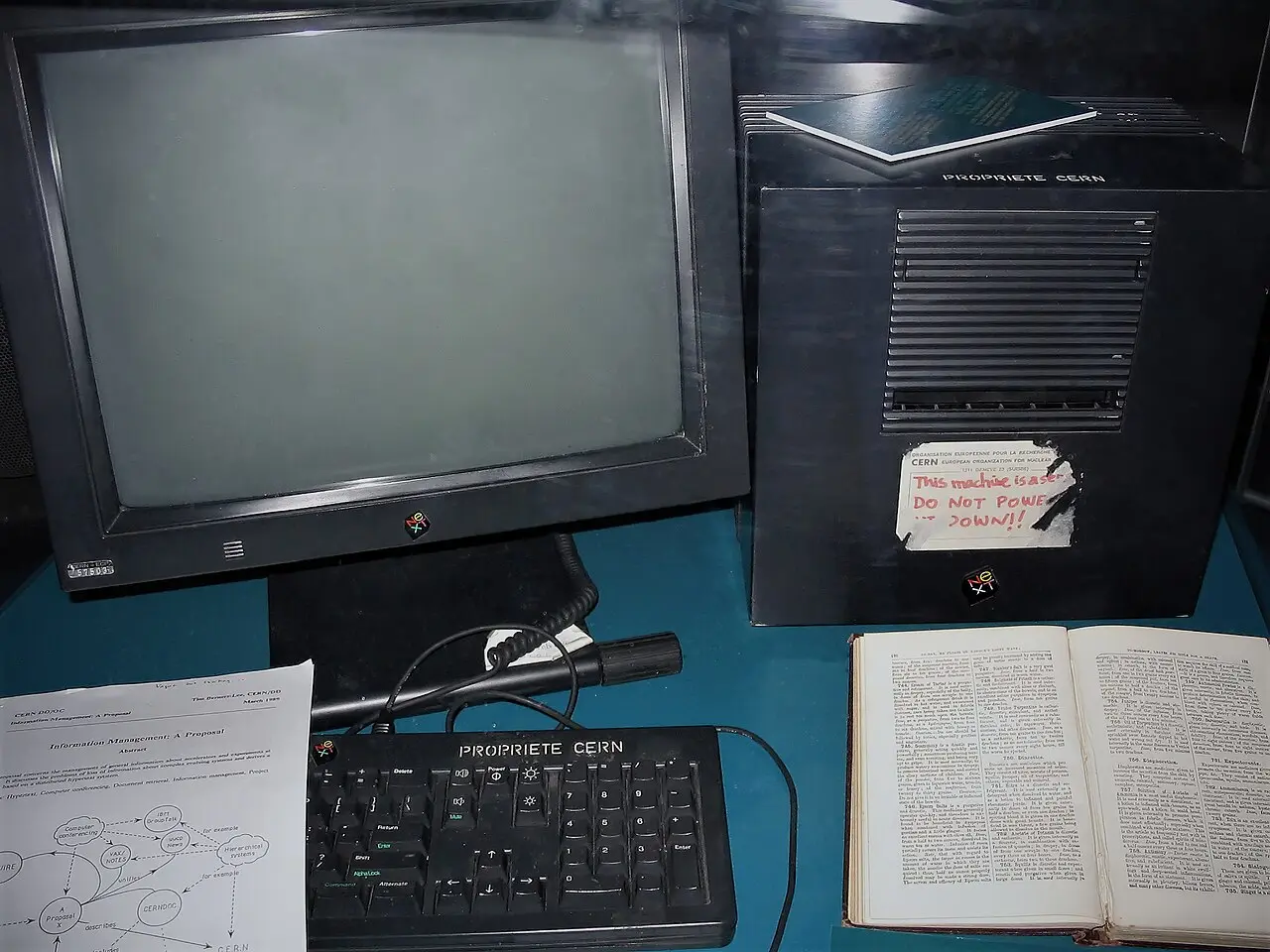
The letter came from CERN, the European particle-physics laboratory outside Geneva, and it concerned the invention of one of its fellows, a soft-spoken British computer scientist named Tim Berners-Lee. In March 1989, Berners-Lee had proposed a "global hypertext system" to help CERN's far-flung scientists share documents. By Christmas 1990 he had built its three essential pieces — the URL, HTTP, and HTML — and the world's first web server, running on his NeXT computer. He marked it with a handwritten sticker that survives in photographs to this day: "This machine is a server. DO NOT POWER DOWN!!" The first web page went live in 1991.
By January 1993 there were about 50 web servers worldwide, and in February a student named Marc Andreessen released Mosaic, the first graphical browser ordinary people could use, from the University of Illinois. But the web had a rival: Gopher, developed at the University of Minnesota — which announced in February 1993 that it would start charging licensing fees. Berners-Lee was furious. In his book Weaving the Web, he called the move "an act of treason" against the internet community, and he pressed his employer to make the web's software free before a paywall could choke it.
CERN agreed. On April 30, 1993, its management signed the letter releasing the web's underlying software — the basic client, server, and library of common code — into the public domain: "CERN relinquishes all intellectual property rights to this code, both source and binary form, and permission is granted for anyone to use, duplicate, modify and redistribute it." It was signed by research director Walter Hoogland and administration director Helmut Weber (the stamp landed on May 3). CERN's leaders had first tried to interest commercial software companies and the European Union in the technology; nobody bit, so giving it away became the plan.
The result was a rout. Free of licenses and fees, the web crushed Gopher; by the end of 1993 browsers were de rigueur for any self-respecting computer user, and in November the National Center for Supercomputing Applications officially released Mosaic. April 30, 1993, matters because the web so easily could have become a licensed, metered product — and instead became the open platform beneath nearly everything digital. One letter, two signatures, and it belonged to everyone.
Photo: Coolcaesar, CC BY-SA 3.0 (via Wikimedia Commons).