
The Day Music Went Mobile: Sony's Walkman Debuts
On July 1, 1979, Sony's Walkman TPS-L2 went on sale in Japan, turning music into a private soundtrack and launching the personal-audio era.
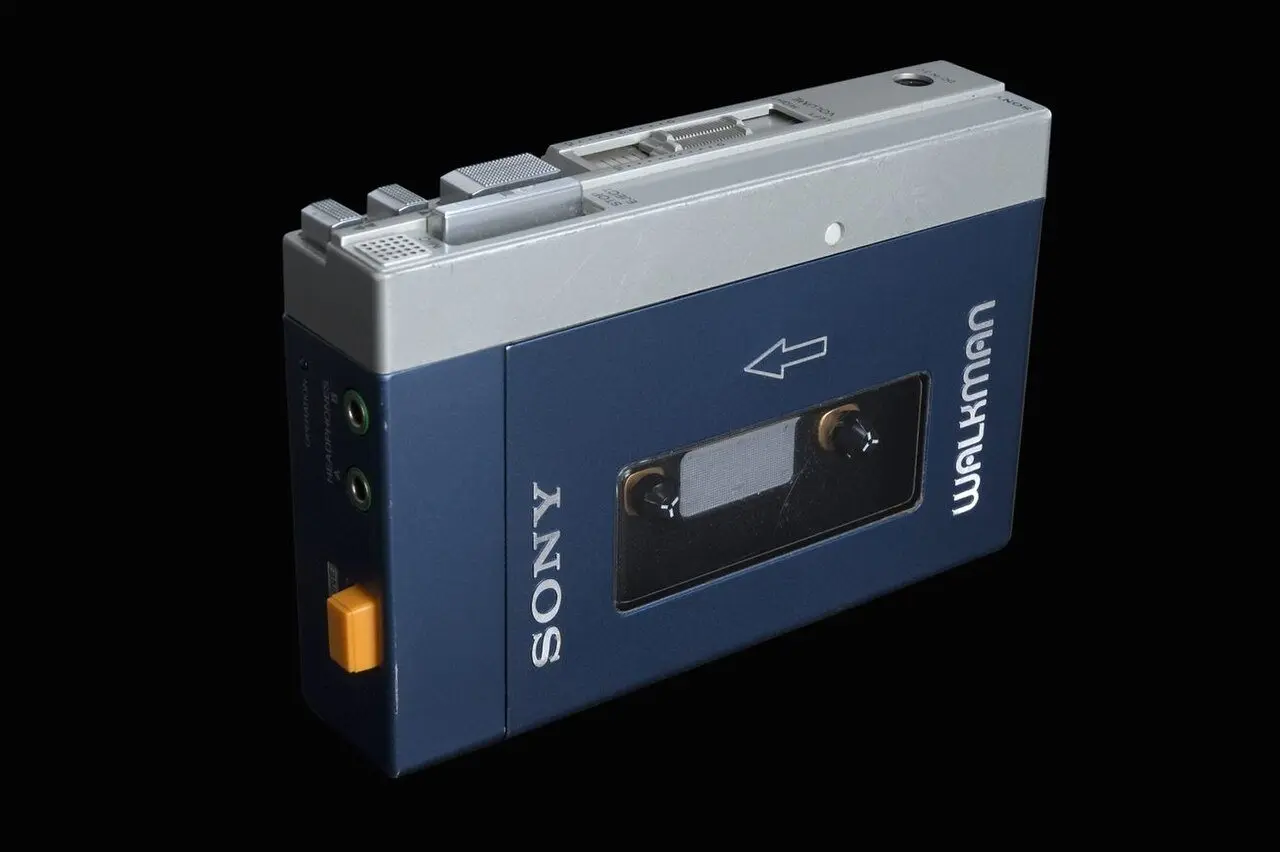
On July 1, 1979, a blue-and-silver brick of metal and plastic went on sale in Tokyo, and the world learned to listen to music alone, together.
Sony co-founder Masaru Ibuka had grown tired of lugging his company's bulky TC-D5 cassette recorder onto long business flights. He wanted something smaller — a player that fit in a pocket, built just for walking. He asked executive Norio Ohga to design a playback-only stereo version, stripped of the recorder and the speakers. The result was the Walkman TPS-L2: a metal-cased cassette player barely larger than the cassette itself, priced at about 33,000 yen, roughly $150.
Inside Sony, plenty of people thought the idea was madness. Who would buy a tape player that couldn't record? Who would wear headphones in public? The company pushed ahead anyway. Its marketing teams handed Walkmans to young people on the streets of Tokyo and invited them to try. Commuters, joggers, and students slipped the headphones on — and kept walking. The sight of people moving through the city sealed inside their own private soundtrack did what no advertisement could.
Sony had predicted sales of about 5,000 units a month. After a sluggish first month, demand exploded: more than 30,000 units sold in the first two months, and the first model eventually sold some 1.5 million worldwide. The TPS-L2 even carried two headphone jacks and an orange "hotline" button that lowered the volume so a pair of listeners could chat — personal audio was social before it was solitary.
Overseas distributors balked at the odd Japanese name, so the device traveled under aliases: the Sound-about in the United States, the Stowaway in Britain, the Freestyle in Australia and Sweden. The American version arrived in June 1980. But by the early 1980s the name Walkman had won everywhere, and the little player became the defining gadget of a decade — the soundtrack of the workout, the commute, and the bedroom wall of mixtapes.
Over the next four decades Sony sold more than 420 million Walkman players across hundreds of models, from cassette to CD to digital, with cassette-based Walkmans alone topping 200 million. Sony would go on to apply the Walkman name to radios, CD players, and digital players, producing more than a thousand models in all. Every pair of earbuds on a morning train, every jogger lost in a playlist, is an heir of that blue-and-silver brick that went on sale in Japan on the first of July, 1979.
Photo: Anna Gerdén, CC BY-SA 3.0 (via Wikimedia Commons).