
The Day America Got Its Own Money
On April 2, 1792, George Washington signed the Coinage Act, creating the U.S. dollar and the United States Mint.
Imagine a country with no money of its own. After winning independence, Americans paid for things with a jumble of Spanish silver dollars, British pounds, French coins, and whatever else happened to be in the till. Shopkeepers needed conversion tables just to make change.
The Constitution gave Congress the power 'to coin money,' and on April 2, 1792, President George Washington signed the law that finally used it: An Act establishing a Mint, and regulating the Coins of the United States — the Coinage Act, also called the Mint Act.
The law did three big things. First, it created the United States dollar as the nation's base unit of money, pegged to the value of the familiar Spanish milled dollar. Second, it set up America's first decimal currency: the dime (a tenth of a dollar), the cent (a hundredth), and even the mill (a thousandth) — a clean break from Britain's confusing pounds, shillings, and pence. Third, it established the United States Mint itself, to be built at the seat of government — Philadelphia, then the nation's capital — with five officers: a Director, an Assayer, a Chief Coiner, an Engraver, and a Treasurer.
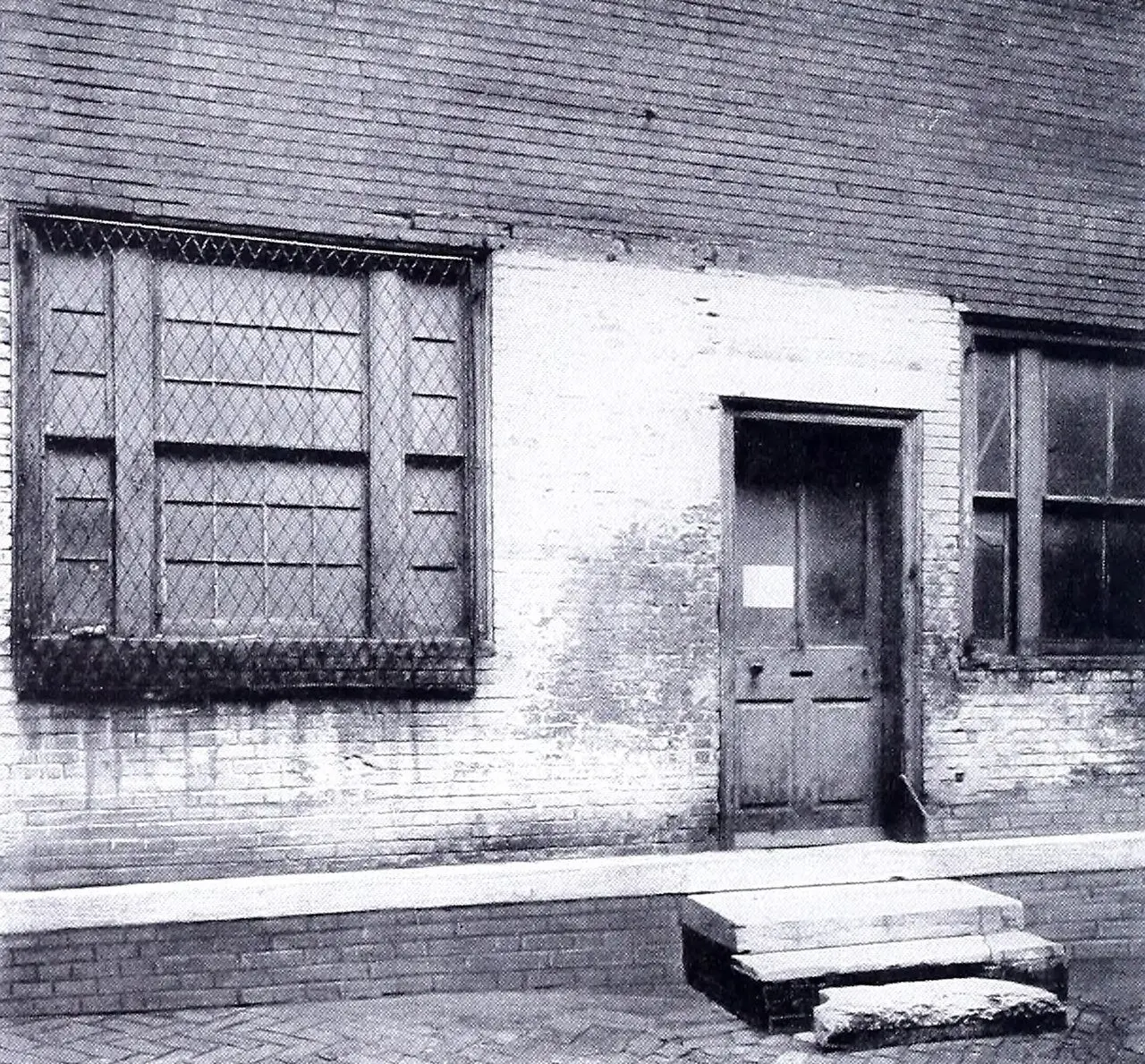
Washington named the scientist David Rittenhouse as the Mint's first director. Rittenhouse bought two lots at 7th and Arch Streets and raised a three-story brick building — the tallest in Philadelphia at the time, and the first federal building erected under the Constitution.
The new money even came with a new spelling. The tenth-of-a-dollar coin was first called the 'disme,' from the French word for tenth, pronounced 'deem' — the ancestor of the word 'dime' we use today.
While the building went up, the work started anyway. In July 1792, about 1,500 tiny silver half dismes — five-cent pieces — were struck in the cellar of a Philadelphia sawmaker's shop, under the Mint's supervision. Secretary of State Thomas Jefferson logged receiving them on July 13. That November, Washington told Congress there had been 'a small beginning' in the coinage.
The little coin carried a big motto: LIB. PAR. OF SCIENCE & INDUSTRY — 'Liberty, parent of science and industry.' Legend says the silver came from George and Martha Washington's own tableware and that Martha's face modeled Liberty, but historians have found no solid evidence for either story. What is certain is that only a few hundred of those half dismes survive today, and the finest have sold for well over a million dollars.
The Act took trust seriously: the Assayer, Chief Coiner, and Treasurer each had to post a $10,000 bond with the Treasury — an enormous sum in 1792 — before they could touch the nation's gold and silver.
Why it matters: the decimal dollar became the model for modern currencies and, in time, the world's reserve currency. The Mint the Act created still strikes the nation's coins in Philadelphia, Denver, San Francisco, and West Point. Every coin in your pocket traces back to a spring day in 1792 when America finally got money of its own.
Photo: Shelden Company (1904), public domain (via Wikimedia Commons).