Ponce de León Names Florida
On April 2, 1513, Juan Ponce de León's expedition sighted the Florida coast and gave the peninsula its flowery name.
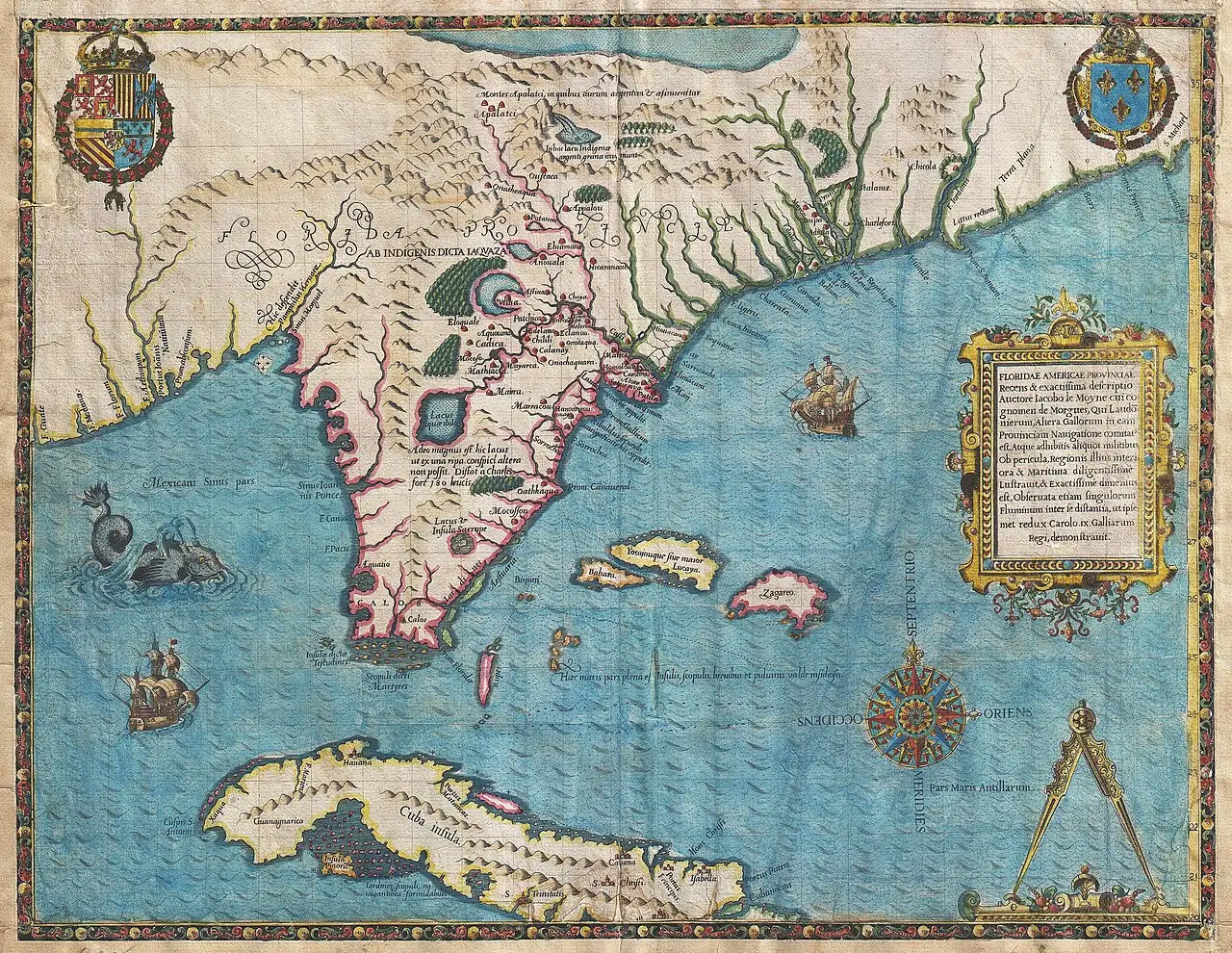
On Saturday, April 2, 1513, lookouts on three small Spanish ships spotted something on the horizon: a long, green coastline where the charts showed only open sea. Their captain, Juan Ponce de León, had sailed north from Puerto Rico in early March with royal permission to explore. Now, at 30 degrees 8 minutes north latitude, his expedition gazed on a land no European voyage had recorded before.
Ponce de León named it La Florida — "the flowery." The name honored two things: the lush, blooming vegetation they could see from the decks, and the season. It was Eastertide, which the Spanish called Pascua Florida — the Festival of Flowers.
Within a day, the Spaniards rowed ashore to take formal possession of the new land in the name of the Spanish crown. The exact landing spot is lost to history, but it was somewhere on Florida's east coast, likely north of present-day Daytona Beach. Ponce de León became the first documented European to set foot on what is now the continental United States.
He was no newcomer to the New World. Ponce de León had helped colonize Puerto Rico and served as its governor, and in February 1512 King Ferdinand had granted him a royal patent to explore and settle any lands he found to the northwest. He sailed with just three ships and about 65 men, threading through the Turks and Caicos and the Bahamas before the mainland hove into view. Florida was the prize he brought home.
The expedition mapped much of Florida's coastline over the following weeks and, turning south, ran into a current so powerful it pushed the ships backward — the first known European encounter with the Gulf Stream, the ocean river that would soon carry Spanish treasure fleets home to Europe.
Legend later claimed Ponce de León was hunting the Fountain of Youth, a magical spring that restored the drinker's youth. Historians find little evidence for that story — gold, land, and royal favor were motive enough.
There is another side to the story that the old chronicles barely mention. Florida was not an empty "discovery." Indigenous peoples — the Timucua, Calusa, Apalachee, and others — had lived there for thousands of years, with towns, trade routes, and complex societies. The sighting of April 2, 1513 marked the beginning of contact, and contact would bring centuries of upheaval to those nations.
Why it matters: a name given on an April day in 1513 stuck — La Florida is still Florida. And every April 2, the state marks Pascua Florida Day, adopted in 1953, to remember the voyage that put Florida on the European map.
Photo: Theodor de Bry (after Jacques le Moyne), 1591, public domain (via Wikimedia Commons).