Muhammad Ali Refuses the Draft: April 28, 1967
On April 28, 1967, heavyweight champion Muhammad Ali refused induction into the U.S. Army, sacrificing his title, his career, and his freedom for his beliefs.
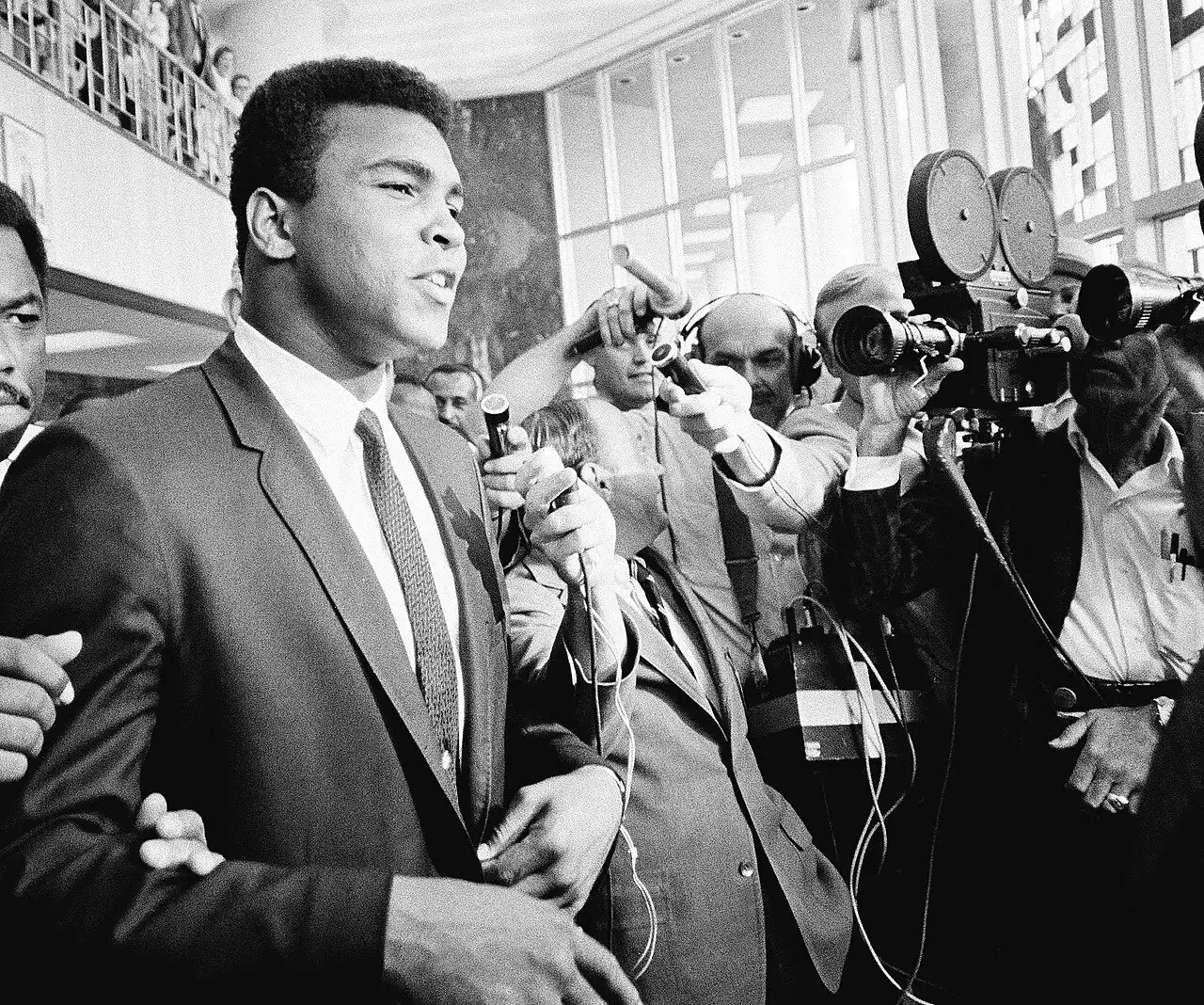
At 25, Muhammad Ali was the most famous athlete on Earth. On April 28, 1967, he walked into a Houston induction center and risked everything — his title, his fortune, his freedom — over a single step he refused to take.
He had been born Cassius Clay. He won the heavyweight championship from Sonny Liston in February 1964, converted to Islam that same year, and took the name Muhammad Ali. The U.S. Army had first classified him 1-Y — ineligible — in 1964 after he failed the military aptitude tests. But as the Vietnam War demanded more troops, the Army lowered its standards, and in 1966 Ali was reclassified 1-A: eligible for the draft.
Ali claimed conscientious-objector status as a Muslim minister, arguing his faith forbade him from fighting wars not declared by Allah. A Kentucky draft appeals board rejected his claim 4-0 on February 20, 1967, and his case was transferred to Houston, where he had moved. Ordered to report for induction, he appeared at the Armed Forces examining station on April 28 — and, when his name was called, refused three times to step forward. An officer warned him he was committing a felony punishable by five years in prison and a $10,000 fine. Ali did not move, and he was arrested.
His explanation, given to the press, became one of the most quoted lines of the decade: "I ain't got no quarrel with them Viet Cong." He argued that he could not fight for a country that denied Black Americans their rights at home while asking them to die abroad.
The punishment was swift and total. That same day, the New York State Athletic Commission suspended his boxing license and the World Boxing Association stripped him of his heavyweight title; other commissions followed, banning him from boxing everywhere in the United States and seizing his passport. On June 4, 1967, football star Jim Brown organized the "Ali Summit" in Cleveland, where leading Black athletes questioned Ali about his convictions and pledged their support. On June 20, a Houston jury convicted him after just 21 minutes of deliberation; he was sentenced to five years in prison and fined $10,000, though he remained free while he appealed.
Ali lost more than three years of his athletic prime — ages 25 to 28 — before Atlanta became the first jurisdiction to license him again. He returned to the ring on October 26, 1970, knocking out Jerry Quarry, and finished his career with a 56-5 record. On June 28, 1971, the U.S. Supreme Court unanimously reversed his conviction in Clay v. United States. He never served a day in prison.
April 28, 1967, matters because a champion at the absolute peak of his powers gave up his crown for his conscience. Ali paid for his stand with the best fighting years of his life — and in doing so became something larger than a boxer: a global symbol of what it can cost to say no.
Photo: Ed Kolenovsky, public domain (via Wikimedia Commons).