Four Black Ships That Ended 200 Years of Isolation
On July 8, 1853, Commodore Matthew Perry sailed four American warships into Tokyo Bay and demanded Japan open to the world.
For more than two centuries, Japan had been closed. Under the policy of sakoku — 'chained country' — the Tokugawa shogunate allowed only tightly controlled Dutch and Chinese trade at Nagasaki and turned every other foreign ship away. Between 1790 and 1853, at least twenty-seven American vessels tried; all were rebuffed.
Then, on July 8, 1853, the horizon at Uraga — the entrance to Edo Bay, within sight of the shogun's capital — filled with coal smoke. Four American warships steamed in: the Susquehanna, the Mississippi, the Plymouth, and the Saratoga. The Japanese called them kurofune — the black ships — for the dark hulls and the black smoke pouring from their steam engines.
Their commander, Commodore Matthew Calbraith Perry, carried a letter from President Millard Fillmore demanding what America wanted: friendship and commerce, protection for shipwrecked sailors, and coaling stations for ships bound for China. And Perry had no intention of asking politely twice.
He ordered his squadron to steam straight past the Japanese guard boats toward Edo itself, training the fleet's guns on the town of Uraga. Then he fired blank salvos from his 73 cannons — which he cheerfully claimed were in celebration of American Independence Day, four days earlier. It was gunboat diplomacy in its purest form: the new shell guns on those decks could have leveled the town.
Japanese officials rowed out with orders for the foreigners to leave for Nagasaki. Perry wouldn't even leave his cabin. As the bearer of a president's letter, he announced, he would deal only with officials of the highest rank. For days the standoff held — the Japanese first threatening, then pleading — while Perry calmly surveyed their defenses and promised to return with an even larger fleet if his letter went unanswered.
On July 14, the shogunate blinked. Perry landed at Kurihama with 250 sailors and Marines, a 13-gun salute thundering from the Susquehanna and a band playing "Hail Columbia." Two high officials formally received Fillmore's letter. Perry sailed away on July 17 — and came back the following February, as promised. On March 31, 1854, Japan signed the Treaty of Kanagawa, ending its isolation.
The shockwaves remade a nation. The shogunate's helplessness was now public; within fifteen years it had collapsed, the emperor was restored, and Japan began its astonishing sprint to modernity.
It matters because few single voyages have bent history so sharply. The black ships forced open a closed civilization — and set in motion both Japan's rise and the rivalries that would convulse the twentieth century. July 8, 1853 is the day Japan rejoined the world, willing or not.
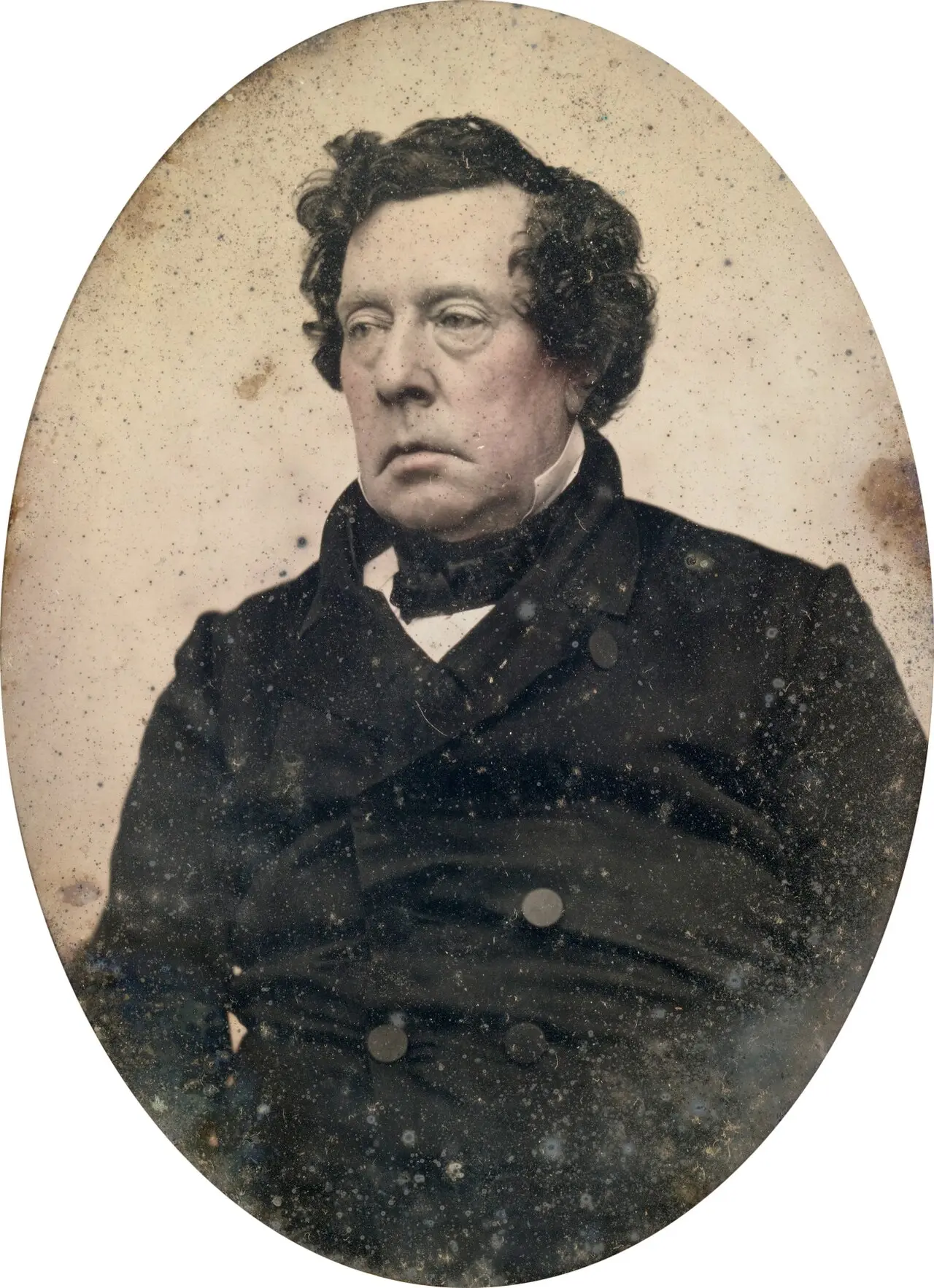
Photo: Commodore Matthew C. Perry, daguerreotype by Mathew Brady, circa 1855–56. Public domain (U.S. Library of Congress) via Wikimedia Commons.