Washington's Spectacles: The Speech That Saved the Republic
On March 15, 1783, George Washington defused a near-mutiny of unpaid officers with an unannounced appearance and a famous line about his spectacles.
They were ready to march on Congress. Then the old general reached for his glasses.
On Saturday, March 15, 1783, the American Revolution was all but won — but at the army's winter camp in Newburgh, New York, the officers were furious. Congress had promised them pensions and back pay for years of service. Congress was broke, and the money never came. Then an anonymous letter began circulating through the camp, urging the officers to take a stand: to refuse to disband, to threaten Congress, to use the army itself as leverage against the civilian government. It was the closest the young United States ever came to a military coup.
George Washington understood the danger instantly. He forbade the unauthorized meeting the letter had called for — and ordered the officers to assemble properly, on March 15, instead. Then he did something no one expected: he showed up himself.
In the camp's meeting hall — a rough wooden building the soldiers called the Temple — Washington stood before his officers and read a prepared address. He told them he understood their grievances, that no one felt them more deeply than he did. But he begged them not to stain the honor they had won through years of war, not to turn the army into a weapon against the republic they had fought to create.
Then, reaching for a letter from a member of Congress to read aloud, he fumbled — and pulled out a pair of spectacles. Few of his officers had ever seen him wear them.
'Gentlemen,' he said, 'you must pardon me. I have grown gray in your service and now find myself growing blind.'
The room broke. Hardened veterans wept. The anger that had filled the Temple drained away, replaced by shame and love for their commander. The next day, the officers passed a unanimous resolution affirming their loyalty to Congress — and Congress, shamed into action, voted the officers five years' full pay.
The crisis was over. The army went home. The republic survived its infancy.
Why does it matter? In that moment at Newburgh, Washington established one of the most important principles in American life: the military answers to civilian authority, not the other way around. He could have ridden that anger all the way to power — kings have been made for less. Instead he put on his glasses, asked to be excused, and went back to being a citizen. Republics survive on moments like that.
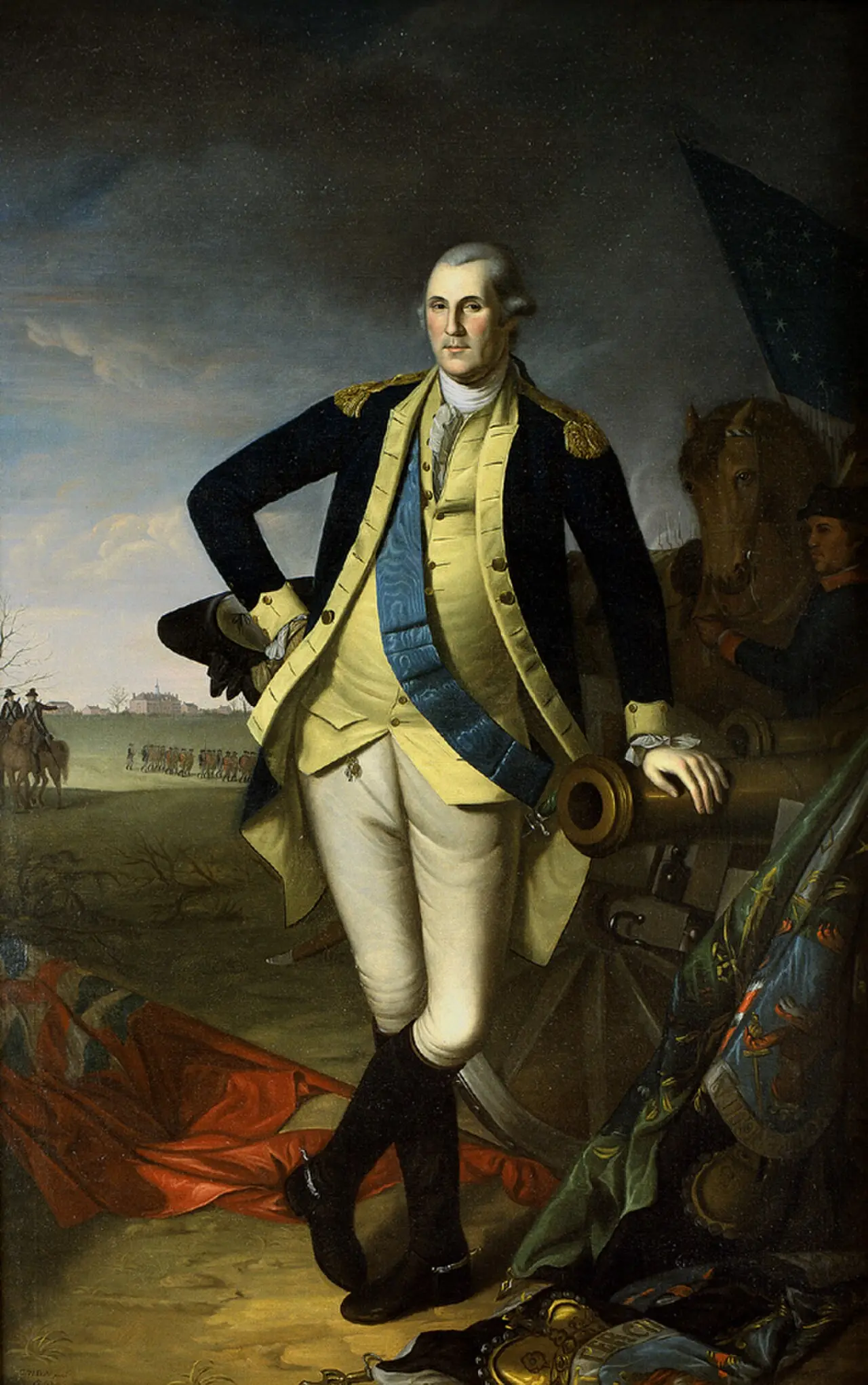
Photo: Charles Willson Peale's 1779 portrait of George Washington at Princeton; public domain via Wikimedia Commons.