The Titanic Slides Into the Water
On May 31, 1911, the hull of the RMS Titanic slid into Belfast Lough before 100,000 spectators — the largest moving object ever built.
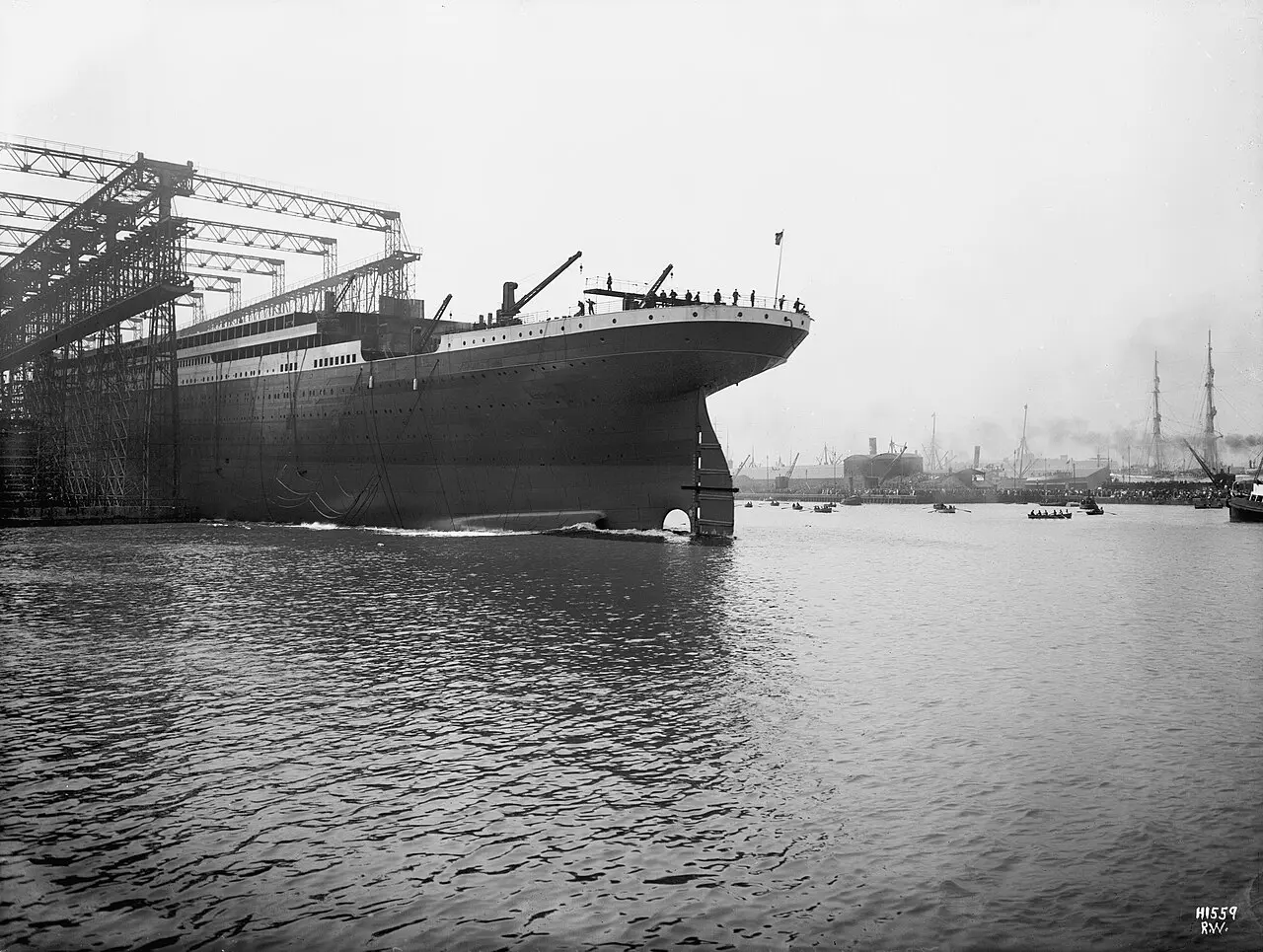
On May 31, 1911, the largest moving object ever built by human hands began to move.
On the slipway at the Harland & Wolff shipyard in Belfast, the hull of the RMS Titanic — 882 feet of black steel, held by shores and greased with 22 tons of tallow, oil, and soap — started its slow slide toward the water. Sixty-two seconds later, with a roar heard across Belfast Lough, she was afloat. An estimated 100,000 people had gathered to watch, cheering from custom-built stands; the shipyard had even sold launch tickets, with the proceeds going to Belfast hospitals.
Titanic was the second of three sister ships ordered by the White Star Line, designed to be the most luxurious liners on the Atlantic. Her keel had been laid more than two years earlier, in March 1909, and at the peak of construction some 14,000 men had labored on her and her older sister, the Olympic, launched the previous October. At the moment of launching, Titanic weighed 24,360 tons — and she was still just a hull. There was no champagne, no christening: White Star Line ships were never formally christened, and Titanic slid into the water in workmanlike silence.
She wasn't finished — not close. For the next ten months she sat at a fitting-out wharf while workers installed her engines, boilers, four funnels, and the famous luxuries of her passenger decks. Only in April 1912 did she sail for Southampton, and then for New York on her maiden voyage.
Everyone knows what happened next. On the night of April 14–15, 1912, Titanic struck an iceberg and sank, and more than 1,500 of the roughly 2,200 people aboard were lost. The disaster shocked the world into action: it became the catalyst for new international rules on safety at sea, including the International Convention for the Safety of Life at Sea — reforms that still protect travelers today.
A century later, Belfast celebrated the launch's centenary with a 62-second cheer — one second for each second of her slide down the slipway — and in 2012 opened the Titanic Belfast museum on the old slipways where she was built.
Why it matters: May 31, 1911, was a day of pure pride — Belfast's shipbuilders launching the wonder of their age. The Titanic's story is a reminder that human ambition can build marvels and still be humbled, and that the price of a tragedy can be measured in the lives it saves afterward.
Photo: Robert Welch, public domain (via Wikimedia Commons).