The Red Ark: America's Most Famous Anarchist Is Deported
On December 21, 1919, Emma Goldman and 248 other radicals were deported to Soviet Russia aboard the ship Buford, dubbed the 'Red Ark.'
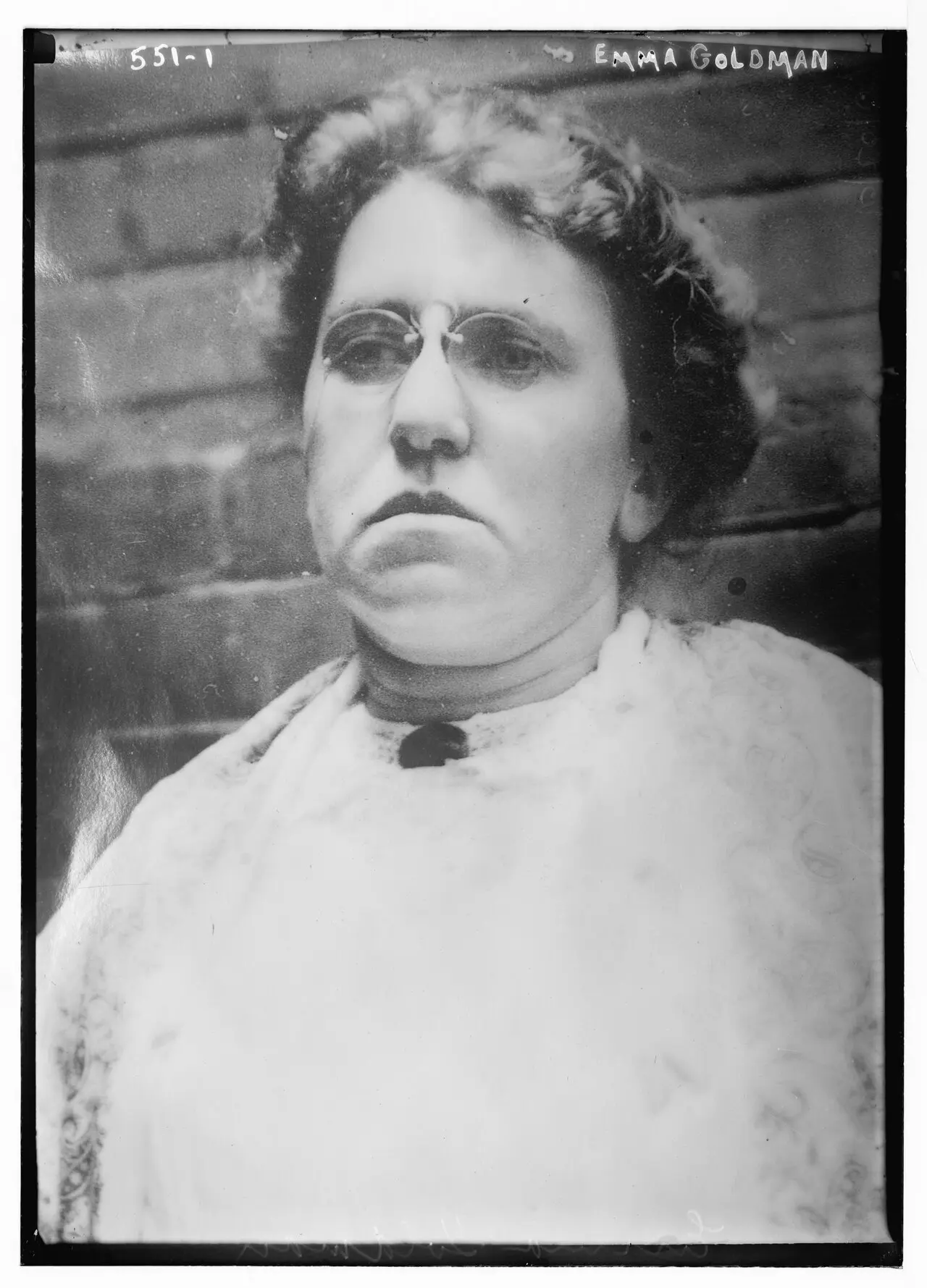
At four in the morning, in falling snow, America put its most famous radical on a leaky old warship and sent her away.
On December 21, 1919, federal agents marched 249 deportees — Emma Goldman plus 248 others — onto the USAT Buford in New York Harbor. The aging Spanish-American War transport, nicknamed the 'Red Ark,' sailed for Soviet Russia. The temperature was 20 degrees; a sharp wind cut across the docks. Most of the deportees were members of the Union of Russian Workers, swept up in the first Palmer Raids. The two best-known were Goldman and her fellow anarchist Alexander Berkman — neither an American citizen, both about to be expelled under the 1918 Alien Act for their beliefs.
Goldman was, by then, the most famous radical in America. Born in Kovno, Lithuania, in 1869, she had arrived in the United States at sixteen and been radicalized by the 1886 Haymarket affair in Chicago, when anarchist defendants were condemned on flimsy evidence. She became a spellbinding orator for free speech, birth control, workers' rights, and the eight-hour day, publishing the journal Mother Earth from 1906 to 1917. The young Margaret Sanger considered her a mentor; Roger Baldwin heard her speak on free speech in 1908 and went on to found the American Civil Liberties Union.
Her crime, in the government's eyes, was opposing the World War I draft. She had organized the No Conscription League, was arrested the very day the Espionage Act became law in June 1917, and served two years in a Missouri prison. With the Red Scare raging, Attorney General A. Mitchell Palmer and his 24-year-old aide J. Edgar Hoover ordered her expelled. Hoover himself came to the docks to watch the Buford sail — and reportedly asked Goldman, 'Haven't I given you a square deal, Miss Goldman?' Her reply: 'We shouldn't expect from any person something beyond his capacity.'
The irony of the Red Ark is what came next: Goldman and Berkman were quickly disillusioned by Bolshevik repression and fled the Soviet Union in December 1921 — deported from America for her radicalism, then driven from Russia for the same reason. She died in Toronto in 1940 and was buried in Chicago, near the Haymarket martyrs who had set her on her path.
The Buford's sailing remains a landmark in the American argument over free speech: how much dissent can a frightened nation tolerate? More than a century later, we are still answering.
Photo: Bain News Service, public domain (via Wikimedia Commons).