The Little Box That Changed Photography Forever
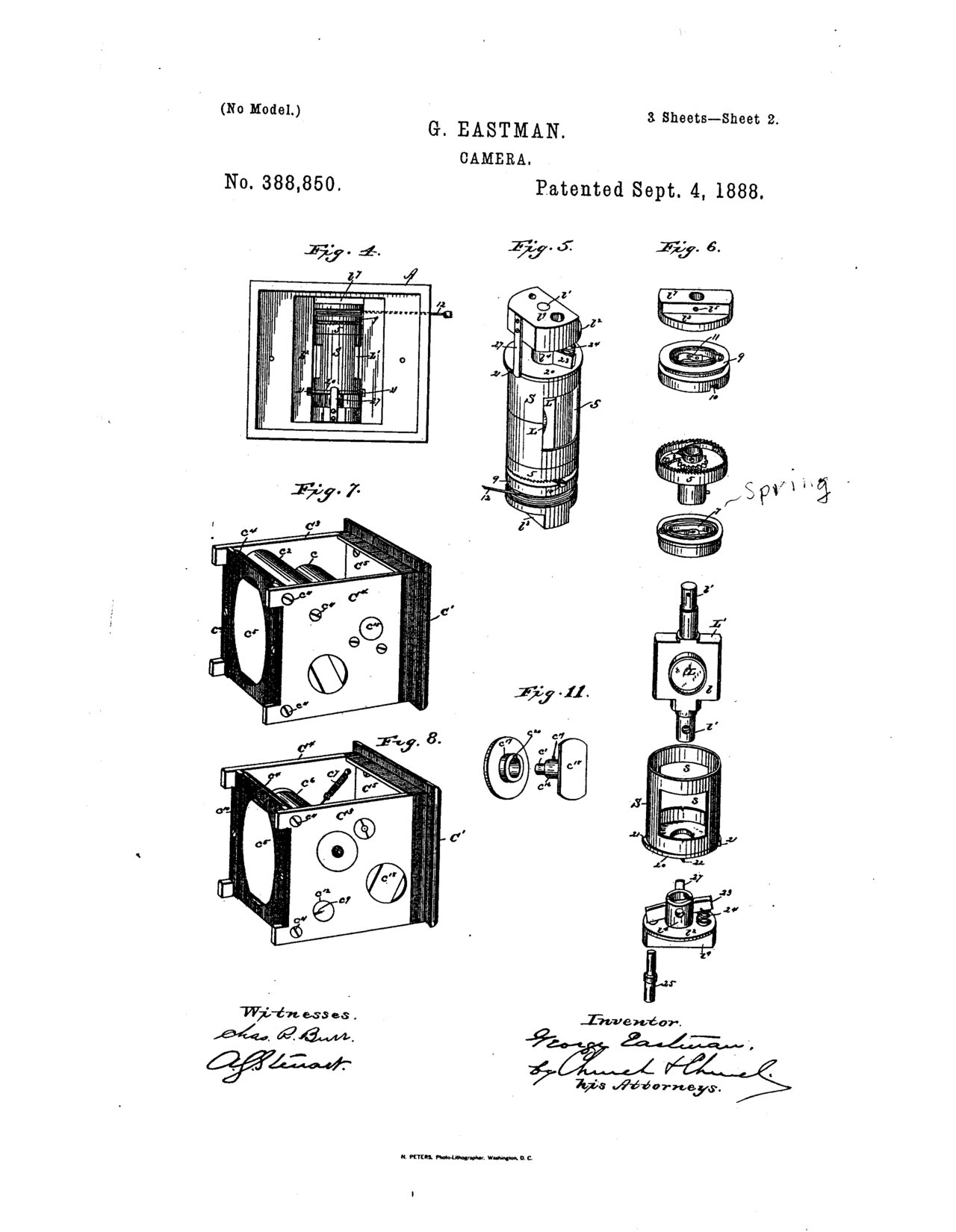
On September 4, 1888, George Eastman received patent number 388850 for his roll-film camera and registered the trademark "Kodak," the little box that made photography a pastime for everyone.
Imagine a camera that fits in one hand, needs no training, and costs less than a good bicycle. In 1888, that sounded like science fiction.
Back then, taking a photograph was a job for specialists. Cameras were heavy wooden contraptions perched on tripods. Every picture required a fragile glass plate, and photographers mixed their chemicals and developed their plates on the spot, sometimes in tents. It was slow, fussy, expensive work — and ordinary people simply didn't do it.
George Eastman changed all that on September 4, 1888. On that single day, the Rochester inventor received U.S. Patent No. 388,850 for his new roll-film camera — and registered the trademark for its brand name: Kodak.
The Kodak was a small wooden box, about the size of a lunch pail, weighing less than two pounds. It came preloaded with a roll of flexible film good for 100 exposures. To take a picture, you pulled a string to ready the shutter, pointed the box, and pressed a button. That was it — no focusing, no chemicals, no darkroom.
And when the roll was finished, you didn't even develop it yourself. You mailed the whole camera to Eastman's factory in Rochester, New York. The company developed your film and sent the camera back, reloaded and ready, along with your prints and negatives. The slogan said it all: "You press the button, we do the rest."
Even the name was an invention. Eastman made up the word "Kodak" from scratch — it meant nothing in any language. He later explained that he simply loved the letter K: "It seems a strong, incisive sort of letter." He tried countless combinations of letters that started and ended with K, and "Kodak" was the result.
The camera was an instant hit. Eastman renamed his company the Eastman Kodak Company in 1892, and a few years later the one-dollar Brownie put cameras into millions of homes. The same flexible roll film, meanwhile, became the foundation of motion pictures — the movies were, quite literally, built on Kodak's idea.
Why it matters: Eastman's little box invented the snapshot — and with it, the family album. Birthdays, holidays, first steps, silly faces: the ordinary moments of ordinary lives suddenly became worth preserving. Before Kodak, photography recorded the important and the official. After Kodak, it recorded everything — including us.
Photo: George Eastman (U.S. Patent No. 388,850, 1888), public domain (via Wikimedia Commons).