The First Woman on Top of the World: Junko Tabei's Everest
On May 16, 1975, Japanese climber Junko Tabei became the first woman to stand atop Mount Everest, twelve days after an avalanche nearly ended her expedition.
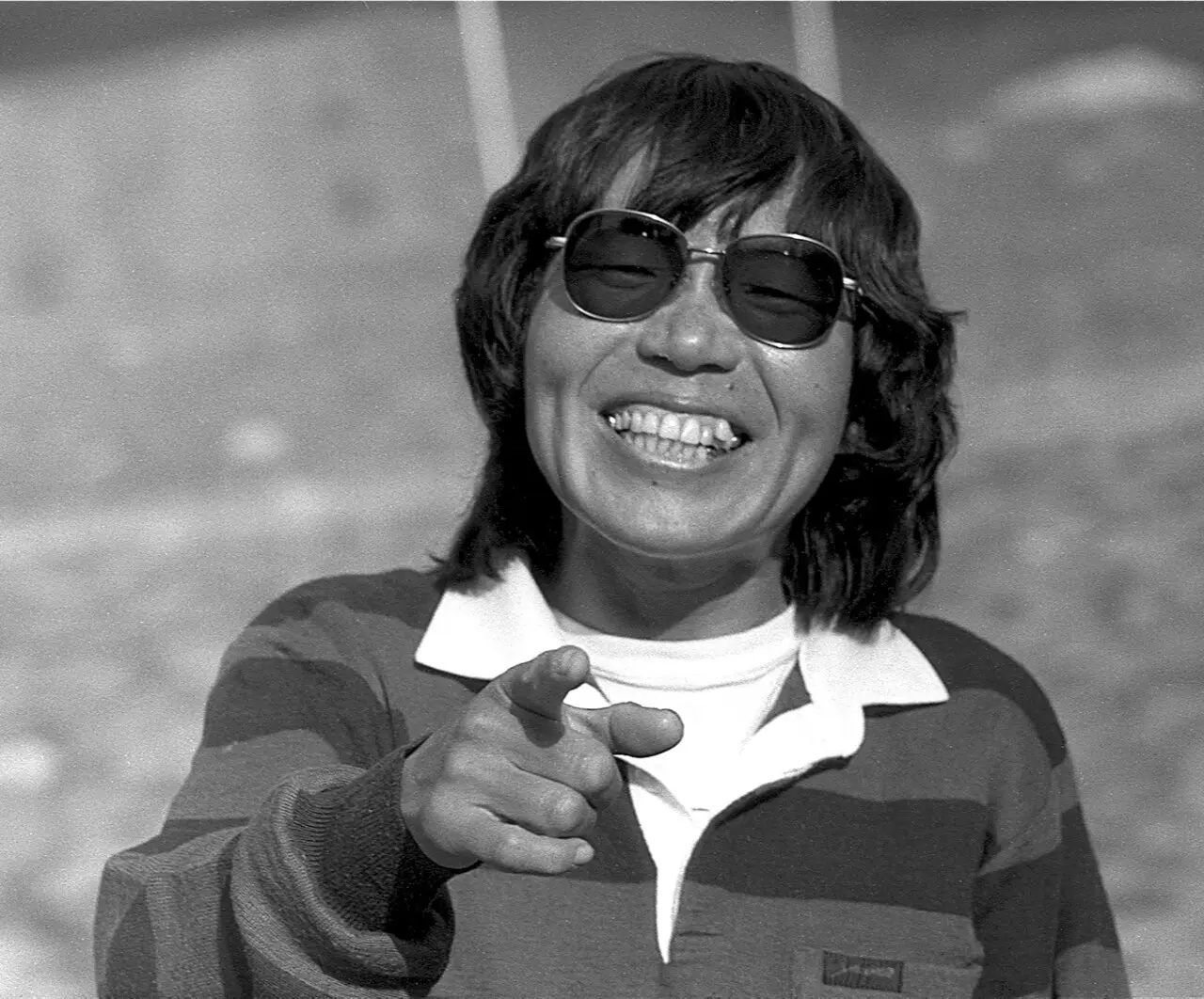
Twelve days after an avalanche buried her in snow, Junko Tabei climbed back up the mountain. On May 16, 1975, the 35-year-old Japanese climber stepped onto the summit of Mount Everest — the first woman in history to stand at the top of the world.
Tabei had not set out to be a symbol. She was a mother of two who had started climbing at age ten, on a school trip to nearby Mount Nasu. When she found that male climbing clubs in Japan would not take her seriously — some men refused to climb with her at all — she did what pioneers do: she started her own club. In 1969 she founded the Ladies Climbing Club, Japan's first all-women mountaineering club, with the slogan "Let's go on an overseas expedition by ourselves."
The 1975 Japanese Women's Everest Expedition was fifteen women — teachers, office workers, two of them mothers — climbing the same route Edmund Hillary and Tenzing Norgay had taken in 1953. Fundraising had been a grind; Japanese television and newspapers doubted the team. Then, at 6,300 meters, disaster struck. An avalanche crashed into their camp in the dark, burying the tents. Tabei was trapped under the snow and knocked unconscious. Her guide dug her out and brought her back around, and remarkably, she refused to go home.
Twelve days later, she and her Sherpa guide Ang Tsering made the summit push. Only two members of the team were in condition to try — Tabei and Yuriko Watanabe — and Watanabe had to turn back to help teammates suffering from altitude sickness. So it was Tabei, on her own two legs, making the final six-hour ascent. At half past noon she took her last steps onto the summit. She unfurled a Japanese flag and posed for photographs. She and Ang Tsering stayed on top for fifty minutes.
She later said the moment brought relief rather than elation: "There was no enjoyment – just relief. I was very happy that I didn't have to climb any more." And she never chased the spotlight, telling the press: "I did not intend to be the first woman on Everest." She said she preferred to be remembered as the 36th person to reach the summit — a climber, not a category.
The world came around anyway. In Kathmandu there was a parade in her honor; in Tokyo, thousands greeted her at the airport. Eleven days after her climb, China's Pan Duo became the second woman to summit. Tabei herself didn't stop. In 1992 she became the first woman to complete the Seven Summits, climbing the highest peak on every continent, and over her life she climbed the tallest mountains in more than seventy countries. Later she earned a master's degree studying Everest's garbage problem, worried that the mountain she loved had become too crowded. She died of cancer in 2016 at 77.
Her climb mattered because of what came before it: the assumption, repeated for decades, that Everest was no place for a woman. On May 16, 1975, a mother of two who had taught herself the mountain answered that assumption with her feet — one slow step at a time, straight to the top.
Photo: Jaan Künnap, CC BY-SA 4.0 (via Wikimedia Commons).