
The Easter Rising Ends: Dublin's Six-Day Rebellion
On April 29, 1916, Patrick Pearse surrendered unconditionally, ending the Easter Rising that set Ireland on the road to independence.
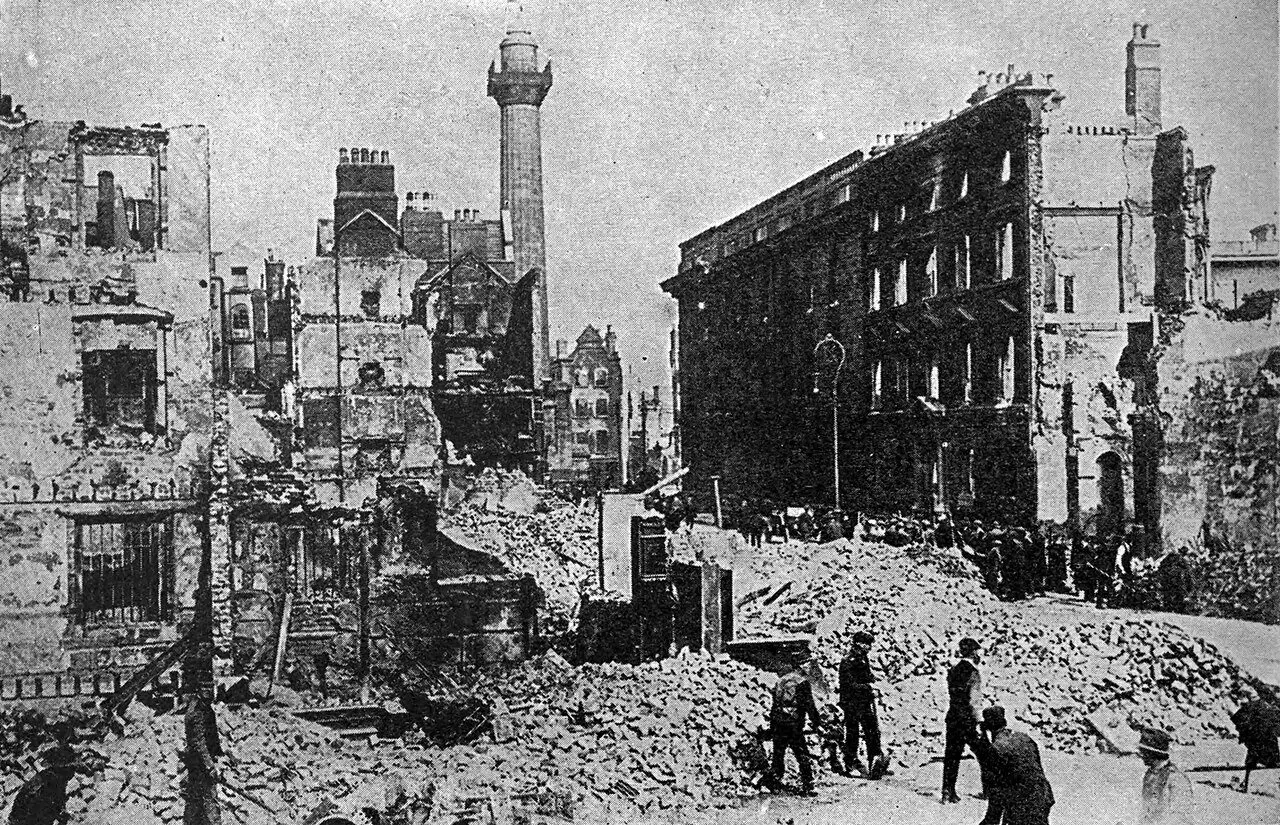
On the afternoon of Saturday, April 29, 1916, Patrick Pearse — the schoolteacher who five days earlier had stood on the steps of Dublin's General Post Office and proclaimed an Irish Republic — walked out under a white flag and surrendered unconditionally. The Easter Rising was over.
It had begun on Easter Monday, April 24. About 1,600 rebels — members of the Irish Volunteers led by Pearse, the smaller Irish Citizen Army of labor leader James Connolly, and some 200 women of Cumann na mBan — seized key buildings across Dublin and declared Ireland independent of Britain. The General Post Office became their headquarters, and the green, white, and orange flag flew over the city center.
The British response was overwhelming. Thousands of troops poured into the city with artillery and a gunboat on the River Liffey. The GPO was shelled until it caught fire, and the rebels were driven from building to building until, by Saturday, they were surrounded with central Dublin in ruins around them. To prevent further slaughter of the city's people, Pearse agreed to surrender.
The toll was heavy: about 485 people were killed — 260 of them civilians, many caught in the crossfire or killed by artillery — and more than 2,600 were wounded. Some 3,500 people were taken prisoner, and 1,800 were shipped to internment camps and prisons in Britain. In the weeks that followed, British courts-martial sentenced the Rising's leaders to death; Pearse, Connolly, and their comrades were executed.
Here is the twist that makes April 29 matter: at the time, most Irish people had opposed the Rising — it looked like a reckless gesture while Irish soldiers were dying in the First World War. But the executions changed everything. The dead leaders became martyrs, and revulsion at the British reaction swept the country. In the 1918 general election, the republican party Sinn Féin won 73 of Ireland's 105 seats. Its members refused to sit in London, convened their own parliament — the First Dáil — and declared independence, setting off the War of Independence.
The Easter Rising failed in six days, but it brought the demand for Irish independence back to the forefront of politics and set Ireland on the road to becoming a republic. The ruins in this photograph are Sackville Street — now O'Connell Street — Dublin, photographed in the aftermath of the fighting.
Photo: Miller, James Martin & H.S. Canfield, public domain (via Wikimedia Commons).