The Chemical Weapons Convention Takes Effect
On April 29, 1997, the Chemical Weapons Convention entered into force, outlawing an entire category of weapons of mass destruction for the first time in history.
Poison gas had haunted battlefields for more than 80 years. On April 29, 1997, the world finally did what it had never done before: it outlawed an entire category of weapons of mass destruction.
The story began at Ypres in 1915, when chlorine gas drifted across the trenches of the First World War and soldiers learned a new kind of terror. The 1925 Geneva Protocol banned the use of chemical weapons — but not making them or stockpiling them, a loophole the great powers kept. The Iran-Iraq War brought the horror back, most infamously at Halabja in 1988, and the 1995 sarin attack on the Tokyo subway showed that chemical weapons were no longer only a military threat.
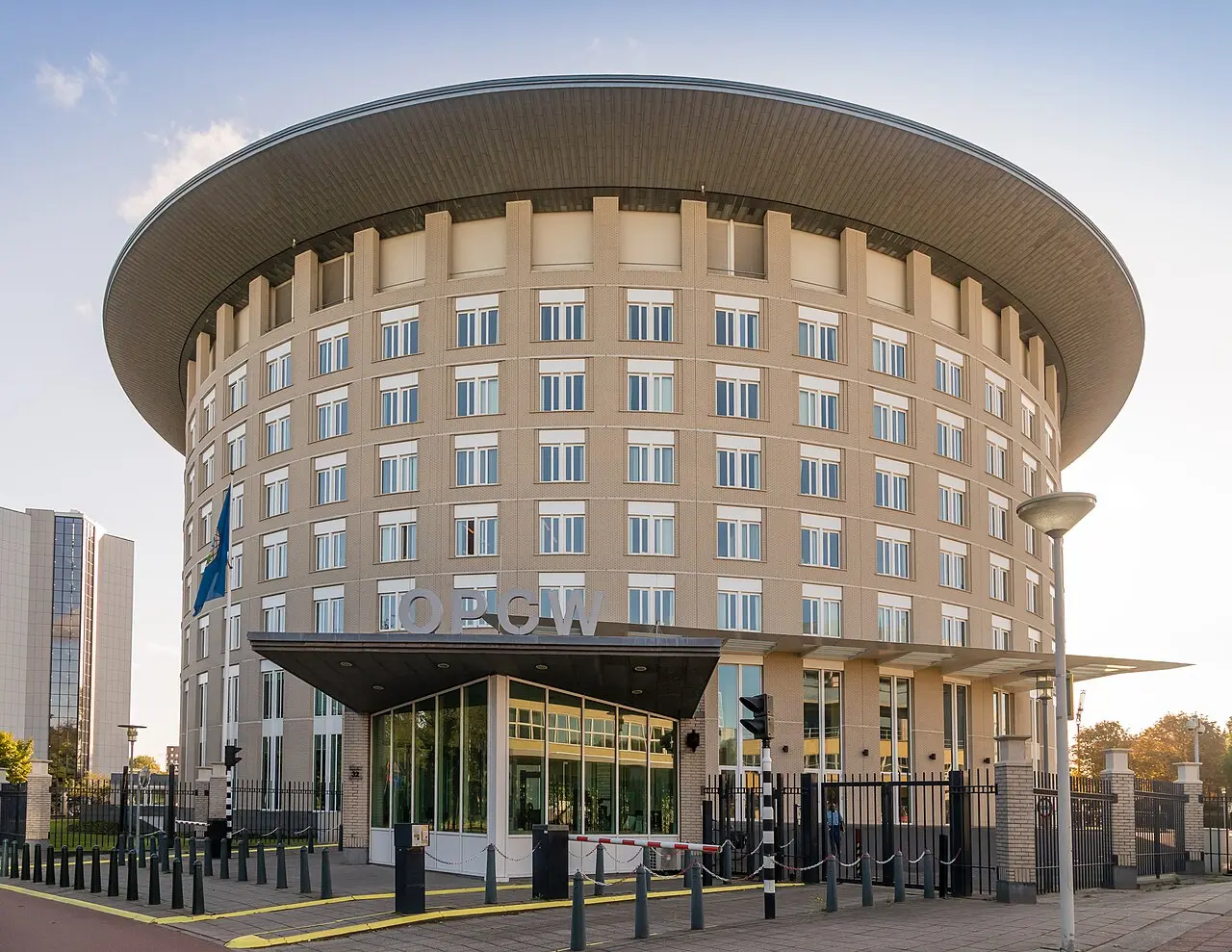
Negotiated in Geneva and opened for signature in Paris on January 13, 1993, the Chemical Weapons Convention went further than any treaty before it. When the 65th ratification was deposited, the clock started: 180 days later — April 29, 1997 — the treaty entered into force, and the Organisation for the Prohibition of Chemical Weapons (OPCW) was established in The Hague to enforce it.
The Convention's demands are sweeping. Member states must never develop, produce, stockpile, transfer, or use chemical weapons; they must declare any stockpiles they hold and destroy them under international observation; and they must open their doors to inspectors — both routine inspections of declared sites and short-notice "challenge inspections" at any location in the country, a verification regime without precedent.
The results are remarkable. The treaty is nearly universal, with 193 member states; Israel has signed but never ratified, and Egypt, North Korea, and South Sudan have never joined. By July 2023, the OPCW announced that all 72,304 metric tonnes of declared chemical agent had been verifiably destroyed — 100 percent. Seven state parties finished destroying their stockpiles, including the United States and Russia, and the OPCW was awarded the 2013 Nobel Peace Prize.
April 29, 1997, matters because it proved that the world's worst weapons can be banned and verified — not just condemned. It was the first treaty to pair a total ban on a class of weapons of mass destruction with an international inspection regime — and thousands of verification missions later, it remains the model for how arms control can work. The work is unfinished: alleged uses in Syria and poisonings abroad show enforcement is the hard part. But the norm is now written down, inspected, and signed by nearly every nation on Earth — and that began on this day.
Photo: CEphoto (Uwe Aranas), CC BY-SA 4.0 (via Wikimedia Commons).