The Dancer Who Ran: Baryshnikov's Daring Defection
On June 29, 1974, ballet star Mikhail Baryshnikov slipped past his KGB minders in Toronto and defected to the West in a daring stage-door escape.
After the curtain fell in Toronto, the greatest dancer in the world walked out the stage door — and kept walking.
Mikhail Baryshnikov was 26 years old and already a star. Born in Riga, in what was then Soviet Latvia, he had moved to Leningrad at 16 to study ballet and joined the famed Kirov company at 19. The New York Times critic Clive Barnes had called him "the most perfect dancer I have ever seen." But stardom in the Soviet Union came with a cage: he was considered too short for the great classical leading roles, and the Soviet ballet world clung to 19th-century traditions, deliberately shutting out the Western choreographers whose work Baryshnikov most wanted to dance.
On the night of June 29, 1974, while on tour in Toronto with a Soviet ballet company, Baryshnikov made his move. The escape had been quietly arranged through friends. Toronto ballet critic John Fraser wrote down the phone numbers of contacts on a scrap of paper and hid it under his wedding ring; at a banquet after the performance, he distracted the KGB officer who shadowed Baryshnikov as an "interpreter" and slipped him the paper. Instead of boarding the company bus, Baryshnikov melted into the crowd outside the stage door — fans chased him for autographs as he ran — and jumped into a waiting car. He hid out until Canada granted him political asylum.
The next morning the story was on the front page of the New York Times. Baryshnikov never framed it as politics. "What I have done is called a crime in Russia," he told the Globe and Mail in his first post-defection interview. "But my life is my art and I realized it would be a greater crime to destroy that. I want to work with some of the West's great choreographers if they think I am worthy of their creations." Years later he would put it more simply: "I'm not a defector — I'm a selector. That was my choice. I selected this life."
He chose Winnipeg to begin — joining the Royal Winnipeg Ballet, away from the New York spotlight, and dancing the Don Quixote pas de deux with Gelsey Kirkland to standing ovations. His first televised performance in the West came with the National Ballet of Canada in La Sylphide. Then came America: principal dancer with American Ballet Theatre, which he would later lead as artistic director, and with the New York City Ballet. He became a U.S. citizen in 1986, acted on stage and screen — including the film The Turning Point and the television series Sex and the City — and in 2005 founded the Baryshnikov Arts Center in Manhattan.
Baryshnikov's leap was the Cold War's most graceful defection — an artist choosing freedom of creation over the safety of a gilded cage. He became the preeminent male dancer of his generation and brought ballet itself into popular culture, proving that art, pursued without compromise, can be its own kind of courage.
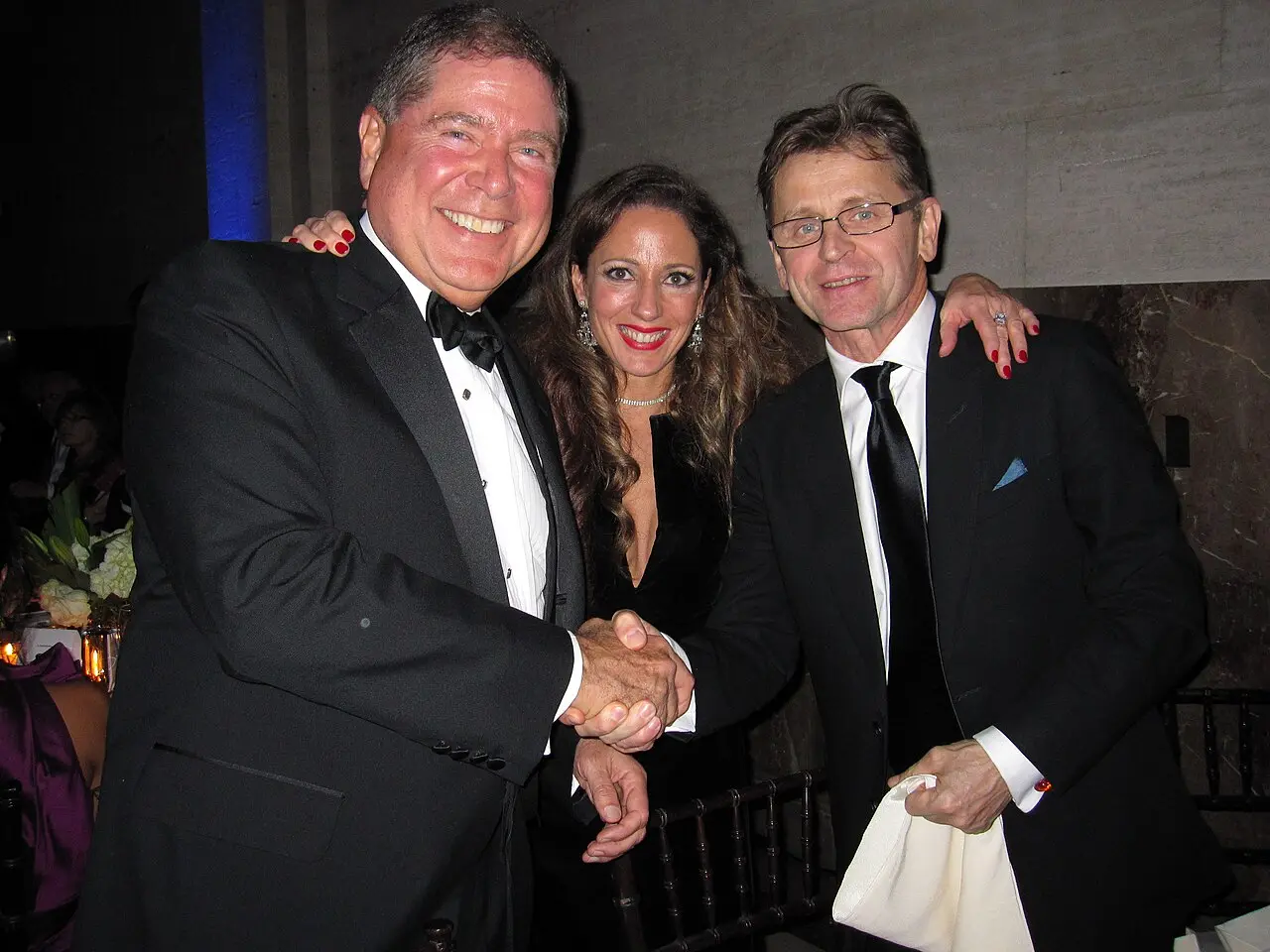
Photo: Knight Foundation — CC BY-SA 2.0 (via Wikimedia Commons).