'Have You No Sense of Decency?' — The Line That Broke McCarthy
On June 9, 1954, Army lawyer Joseph Welch's televised rebuke of Senator Joseph McCarthy — 'Have you no sense of decency?' — broke the spell of McCarthyism.
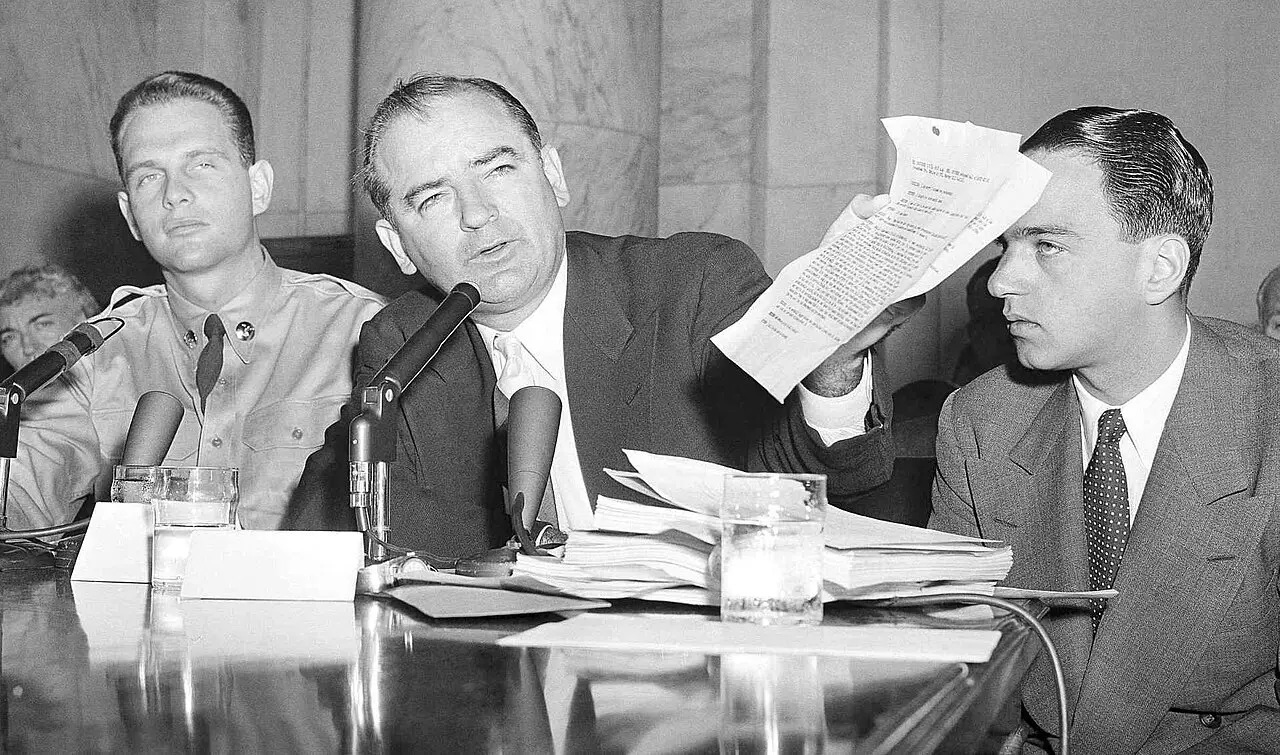
It was the thirtieth day of the hearings, and the whole country was watching. For weeks, the Army-McCarthy hearings had played out on live television — an unprecedented spectacle — as Senator Joseph McCarthy bullied witnesses with accusations of communist infiltration that destroyed reputations by the dozens. Then, on June 9, 1954, a soft-spoken Boston lawyer looked the senator in the eye and said the thing millions of Americans had been thinking.
McCarthy had ridden anticommunist hysteria to extraordinary power, waving lists of supposed subversives and ending careers on rumor. In early 1954, at the peak of his influence, he made a fateful overreach: he accused the United States Army itself of being "soft" on communism. President Dwight D. Eisenhower, a Republican like McCarthy but no admirer, pushed for an investigation of the charges. The result was the televised hearings, with McCarthy temporarily stepping down as chairman while the Senate examined his claims against the Army.
The Army hired Joseph N. Welch, a courtly Boston attorney from the firm Hale and Dorr, to make its case. Day after day, Welch's steady, almost gentle questioning blunted McCarthy's charges, and the senator grew visibly angrier — bellowing "point of order," screaming at witnesses, calling a decorated general a disgrace to his uniform. On June 9, Welch challenged McCarthy's chief counsel, Roy Cohn, to deliver McCarthy's supposed list of 130 communists in defense plants to the Attorney General "before sundown."
McCarthy snapped. Instead of answering, he lashed out at a target in Welch's own camp: Fred Fisher, a young associate at Welch's law firm, who had once belonged to the National Lawyers Guild, a group the Attorney General had called the "legal mouthpiece of the Communist Party." Welch had privately arranged for Fisher to stay away from the hearings precisely to shield him. Now McCarthy had named the young man before a nationwide television audience, without warning.
Welch's reply became one of the most famous moments in American political history. "Until this moment, Senator, I think I never really gauged your cruelty or your recklessness," he said. And when McCarthy tried to renew the attack, Welch cut him off: "Let us not assassinate this lad further, Senator. You have done enough. Have you no sense of decency, sir? At long last, have you left no sense of decency?" The hearing room burst into spontaneous applause.
The spell was broken. Within a week the hearings came to a close. Overnight, McCarthy's immense popularity evaporated; the press that had amplified him now ignored him, and his own party shunned him. On December 2, 1954, the Senate voted to censure him for conduct contrary to senatorial traditions. He died three years later, at 48, a broken man.
Why it matters: the Welch moment showed America the human cost of accusation as a weapon — and showed the new power of television to expose a bully in real time. "McCarthyism" entered the language as a permanent warning, and Welch's question became the standard rebuke for reckless cruelty in public life, quoted by presidents and protesters alike ever since.
Photo: Associated Press, public domain (via Wikimedia Commons).