
A Queen in White: The Wedding That Dressed the World
On February 10, 1840, 20-year-old Queen Victoria married Prince Albert in white satin — and set the template for weddings ever since.
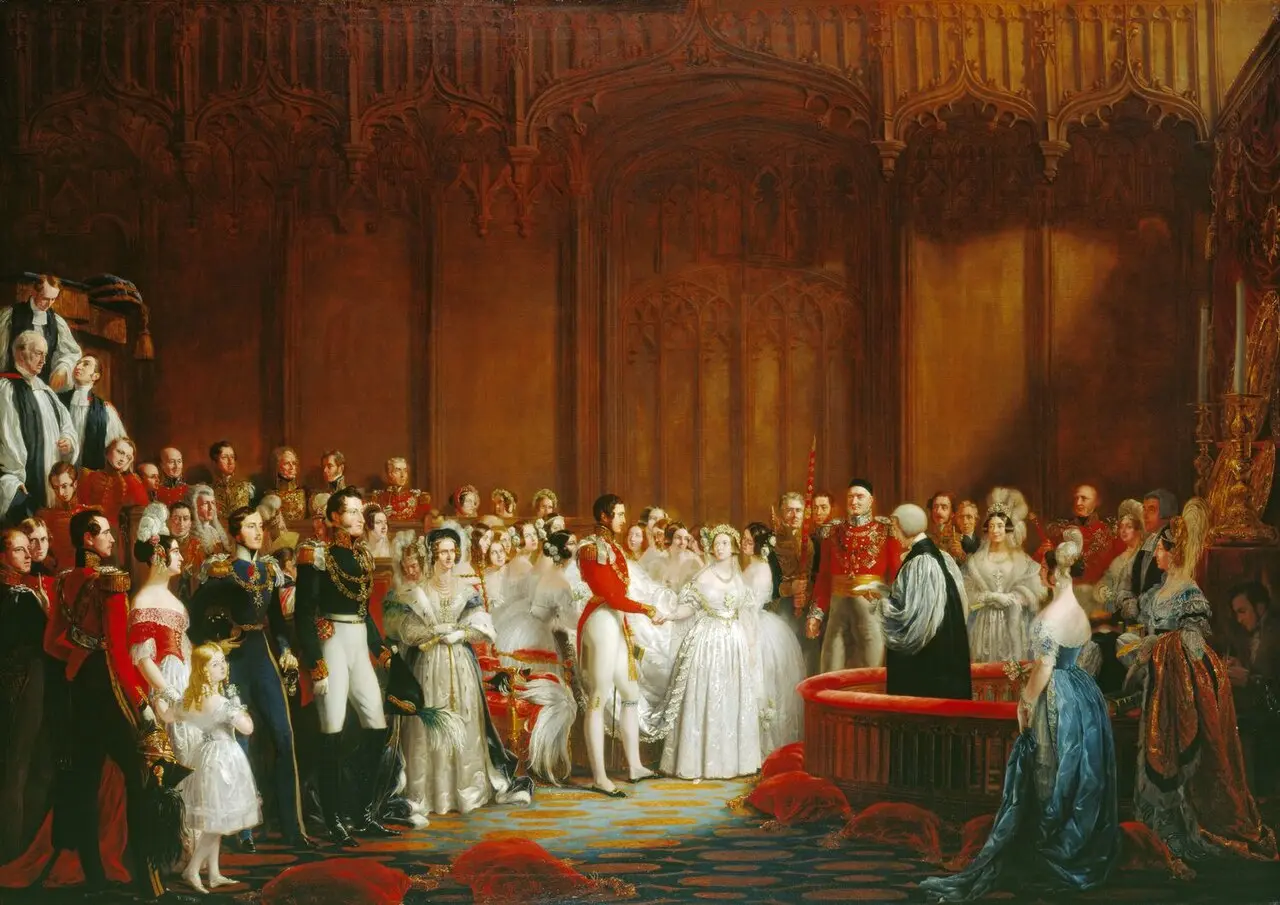
She was the Queen of England, so by the rules of the time, she had to do the proposing. On October 15, 1839, five days into Prince Albert's second visit to England, the 20-year-old Victoria summoned her German cousin to a private audience and asked him to marry her. He accepted joyfully. Four months later, on February 10, 1840, they were married at one o'clock in the afternoon in the Chapel Royal at St. James's Palace in London — and Victoria wore white.
That choice is the reason brides wear white today. Victoria's gown was made of heavy white silk satin spun in Spitalfields, London, trimmed with a deep flounce of Honiton lace worked by hand in the Devon villages of Honiton and Beer. The dressmaker was Mary Bettans; the lace was designed by William Dyce. She deliberately set aside her crimson velvet robes of state — she wanted to be married as a bride, not as a queen — and she dressed her twelve bridesmaids in white as well. The wedding cake weighed some 300 pounds and needed four men to carry it. From her bouquet, Victoria planted a sprig of myrtle in the palace garden, starting a royal tradition: a cutting from that same myrtle appeared in Queen Elizabeth II's bridal bouquet more than a century later.
Victoria was not, strictly speaking, the first bride to wear white — historians have found earlier examples. But her wedding was one of the most reported events of its age, with engravings of the ceremony circulating across Britain and beyond, and the simplicity of her dress made it easy to copy. Within a generation, the white wedding had gone from a royal eccentricity to the expectation. The young queen had also insisted on a daytime ceremony with a public procession, breaking the royal habit of private nighttime weddings, and opening the door to the public royal weddings of the modern era.
The marriage itself became one of history's great partnerships. Albert threw himself into British public life — championing science, education, industry, and the arts — and the couple had nine children whose marriages wove the family into nearly every royal house in Europe, earning Victoria the nickname "the grandmother of Europe." When Albert died in 1861, Victoria wore mourning black for the rest of her life and ordered his rooms kept exactly as he had left them, his clothes laid out fresh each day.
The British artist George Hayter spent two years painting the wedding, completing his enormous canvas — with fifty-six individual portraits, including the Duke of Wellington and both archbishops — in 1842. It hangs in Buckingham Palace to this day.
Photo: George Hayter (1842), public domain (via Wikimedia Commons).