Two Friends, One Campfire, and the Saving of Yosemite
On October 1, 1890, Yosemite became a national park — the result of a camping trip where naturalist John Muir showed a magazine editor the damage sheep and saws were doing to the Sierra.
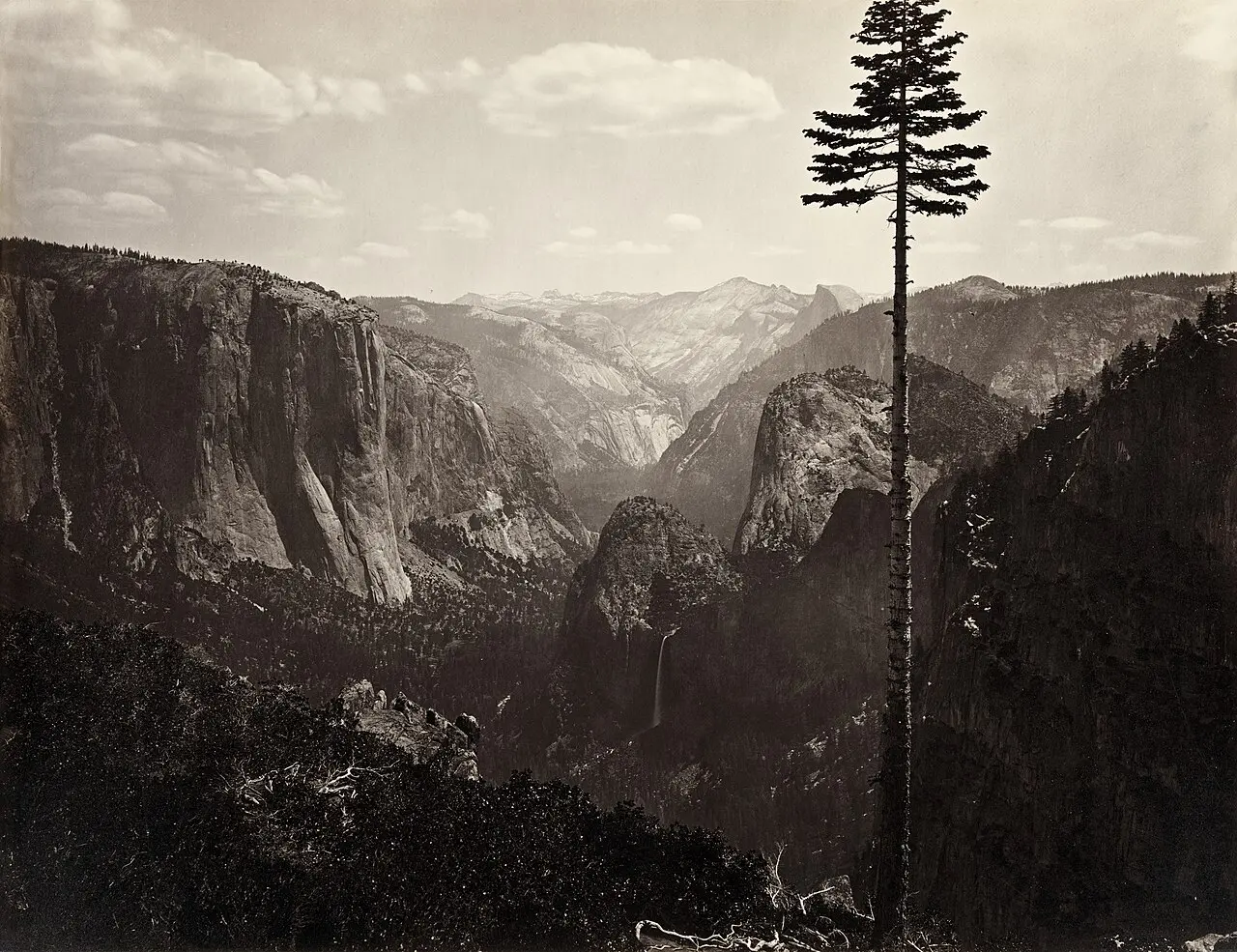
It started with a campfire. In the summer of 1889, two men sat beside a fire at Tuolumne Meadows in California's Sierra Nevada and watched the light play on granite that was being chewed apart by sheep and saws. One of them was John Muir, a naturalist who had fallen in love with the Yosemite country twenty years earlier. The other was Robert Underwood Johnson, the editor of Century Magazine — one of the most widely read publications in America. By the time the embers died, they had hatched a plan to save the place forever.
Muir had arrived in California in March 1868 and promptly walked into Yosemite, where he found work tending sheep for a local rancher. The job gave him years to study the valley's plants, rocks, and animals, and the articles he wrote about them made him famous. But fame turned to alarm as he watched the high country being stripped: meadows trampled by vast flocks of grazing sheep, giant sequoias felled for lumber, whole slopes scarred by logging. The valley floor itself had been protected since 1864, when President Lincoln signed a grant giving it to California as a state park — but the lands around it had no protection at all.
Johnson was the ally Muir had been waiting for. As Johnson later recalled, Muir spent that second night at the campfire in "whimsical denunciation" of the mismanagement ruining Yosemite's beauty — and the two men agreed that only the federal government could save it. Johnson had two weapons Muir lacked: a magazine that reached some 200,000 subscribers, and real political influence in Washington.
Johnson urged Muir to write, and Muir delivered. His two articles for The Century — "Treasures of the Yosemite" in August 1890 and "Features of the Proposed Yosemite National Park" in September — painted the region in prose that thrilled Eastern readers and laid out exactly where the park's boundaries should run. Johnson, meanwhile, lobbied Congress tirelessly, assembling a coalition broad enough to overcome the cattlemen, sheepherders, and lumber interests who wanted the land left open.
It worked. On October 1, 1890, Congress passed the Yosemite Act, and President Benjamin Harrison signed it into law, creating Yosemite National Park — nearly a million acres of mountains, meadows, rivers, and giant trees, protected "for the preservation from injury of all timber, mineral deposits, natural curiosities, or wonders." Army cavalry patrols were sent in to guard the new park. (The valley floor itself stayed under California's control until 1906, when it was finally returned to the nation.)
Muir wasn't finished. Two years later he helped found the Sierra Club — and served as its first president — giving the conservation cause a permanent organization. The club's victories would eventually include national forests, more parks, and the long fight over Hetch Hetchy.
It matters because October 1, 1890, was one of the first times any government set aside a great landscape simply because it was beautiful and wild — not for timber, not for minerals, but for itself and for the people who would come after. The campfire bargain between a writer and an editor became a template: witness, write, persuade, protect. Every national park on Earth owes something to that night at Tuolumne Meadows.
Photo: Carleton Watkins, ca. 1865, public domain (via Wikimedia Commons).