
The Day Nine Justices Ended 'Separate but Equal' in Schools
On May 17, 1954, the Supreme Court ruled unanimously in Brown v. Board of Education that racially segregated public schools are unconstitutional.
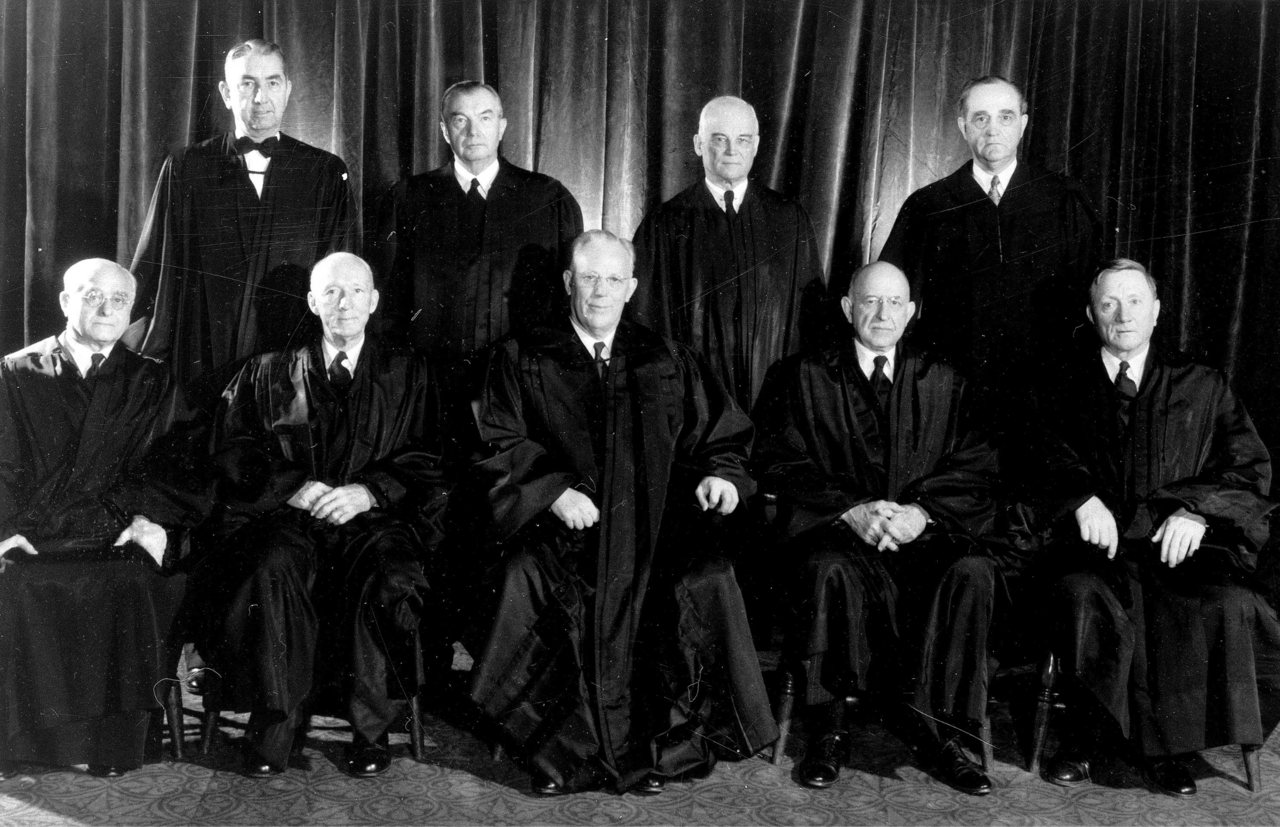
It took Chief Justice Earl Warren only a few minutes to read the words that rewrote American life. On May 17, 1954, the United States Supreme Court ruled, 9 to 0, that racial segregation in public schools was unconstitutional — and the doctrine of "separate but equal" fell with it.
The case began with an ordinary frustration in Topeka, Kansas. Seven-year-old Linda Brown had to cross railroad tracks and ride a bus across town to a segregated school for Black children, even though a school for white children stood just blocks from her home. Her father, Oliver Brown, joined twelve other Black families in Topeka to sue the local school board, arguing that the segregation policy violated the Constitution. A federal court ruled against them, bound by an 1896 Supreme Court decision, Plessy v. Ferguson, which had declared that racial separation was legal as long as the facilities were "equal."
The families, now represented by NAACP chief counsel Thurgood Marshall, appealed to the Supreme Court. Their case was combined with similar challenges from South Carolina, Virginia, Delaware and Washington, D.C. It was argued in December 1952 — and then, at the justices' request, argued again in December 1953. The delay had a purpose: several justices believed that ending constitutionally protected segregation demanded a unanimous Court, so that no one could dismiss a divided ruling as mere opinion.
They got it. Warren, who had worked tirelessly to bring every justice aboard, wrote a single opinion joined by all nine. Segregation in public education, the Court held, "generates a feeling of inferiority as to [Black children's] status in the community that may affect their hearts and minds in a way unlikely ever to be undone." Its core holding has never been more simply put: "separate educational facilities are inherently unequal." The last holdout, Justice Stanley Reed, was reportedly in tears as the opinion was read — not in dissent, but at the gravity of what the Court was doing.
The ruling did not desegregate a single school by itself; a follow-up decision the next year ordered states to proceed "with all deliberate speed," and the real fight took decades of courage from students, parents and teachers. But Brown supplied the legal foundation for everything that followed — the Civil Rights Act, the Voting Rights Act, and the whole architecture of American civil-rights law. It also crowned the career of Thurgood Marshall, the lawyer who argued it and would one day sit on the Court himself.
Every May 17 is a reminder that the Constitution's promises are not self-enforcing. They needed a bus ride in Topeka, thirteen families who refused to accept it, and nine justices who finally agreed to mean what the words said.
Photo: public domain (via Wikimedia Commons).