
The $1,300 Bet That Became Apple
On April 1, 1976, two friends and a tie-breaking partner founded the Apple Computer Company to sell a hand-built circuit board called the Apple I.
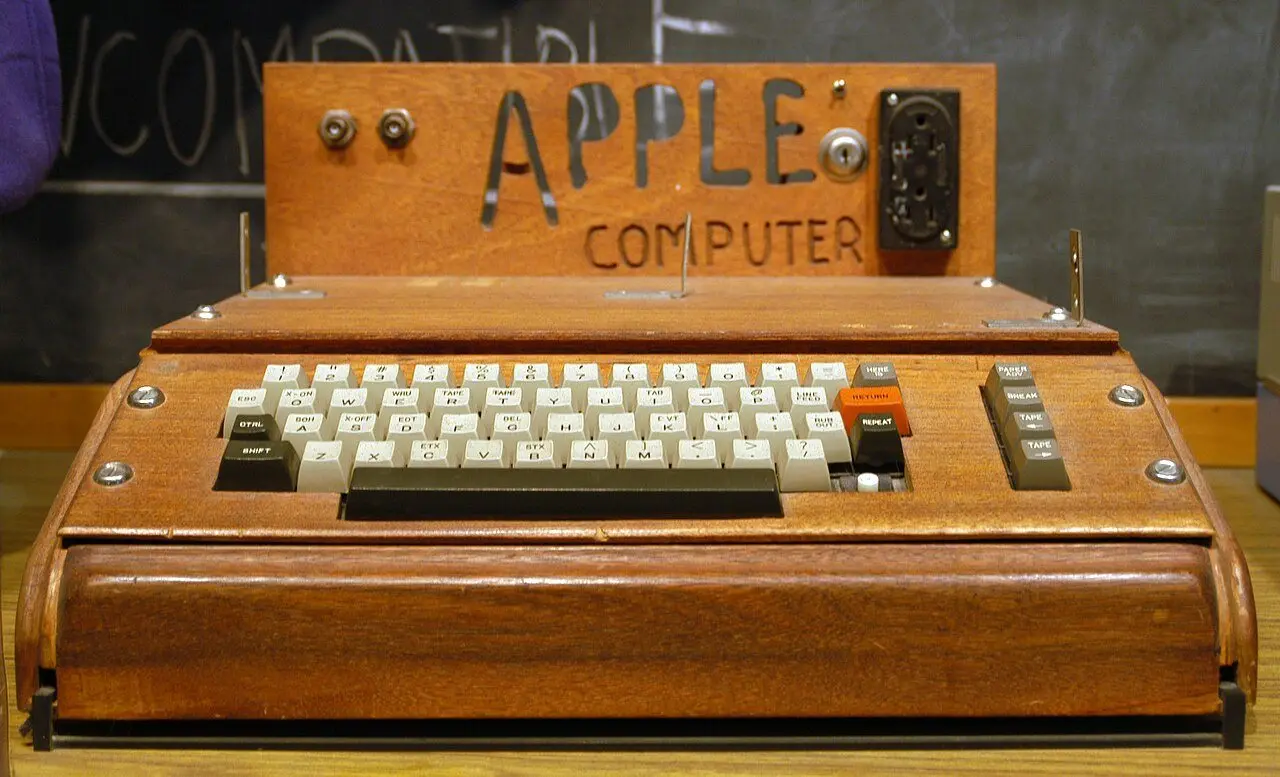
It was April Fools' Day, and the paperwork looked like a prank. Three men signed a partnership agreement to build computers in a suburban California house and sell them to hobbyists. Nobody laughed louder than history would.
The trio were an odd bunch. Steve Wozniak, 25, was the engineering genius, a Hewlett-Packard employee who had built a computer just to show off to friends at the Homebrew Computer Club in Menlo Park. Steve Jobs, 21, was the visionary who saw a product where Wozniak saw a toy. And Ronald Wayne, 41, an Atari colleague they called the adult in the room, drafted the agreement, drew the company's first logo — Isaac Newton under an apple tree — and took a 10 percent stake so he could break ties between the two young hotheads.
They had almost no money. Jobs sold his Volkswagen bus. Wozniak sold his beloved HP-65 calculator. Together they scraped up about $1,300 — and got to work.
Wozniak hadn't set out to start a company at all. He built the machine to show his fellow hobbyists that a real, programmable computer could be assembled cheaply — with just a few chips — for the price of the popular Altair kit. Jobs was the one who saw past the hobby. Where Wozniak saw a clever toy to share with friends, Jobs saw a product — and talked his friend into going into business.
Their first product, the Apple I, was Wozniak's hand-built circuit board. Unlike the kit computers of the day, it came pre-assembled — buyers only had to add a keyboard, a power supply, a case, and a household television for a screen. In July 1976, Wozniak demonstrated it at the Homebrew Computer Club, and a local shop, the Byte Shop, ordered 50 fully assembled machines at $666.66 apiece. (Wozniak later said he picked the price because he liked repeating digits.)
The partnership nearly ended before it began. Twelve days after signing, Wayne — worried about the financial risk — sold his 10 percent share back to Jobs and Wozniak for $800, one of the most famous exits in business history. Before leaving, he had also drawn the company's elaborate first logo and written the Apple I's operations manual.
About 200 Apple I machines were eventually built, most of them hand-assembled by Wozniak himself. Surviving examples are now museum pieces worth hundreds of thousands of dollars — a far cry from $666.66.
On January 3, 1977, Apple Computer, Inc. was formally incorporated. Veteran executive Mike Markkula invested $250,000 and brought grown-up business discipline. In its first five years, Apple's revenue roughly doubled every four months.
Why it matters: the Apple I proved that ordinary people wanted computers of their own. Its successor, the Apple II, turned that hunch into an industry — and the little company founded on April Fools' Day went on to reshape how the world computes, listens to music, and talks on the phone. All from $1,300, a homemade circuit board, and three signatures.
Photo: Ed Uthman, CC BY-SA 2.0 (via Wikimedia Commons).